Do Sunlight and UV Light Damage Anime Figures? How to Protect Paint, Color, and Resin
Yes, direct sunlight and strong UV light can damage anime figures by fading paint, shifting color, and stressing materials like resin and PVC over time. If you want to protect anime figures from sunlight, the safest approach is simple: keep them out of direct sun, reduce UV exposure, and use stable indoor display lighting instead.
That quick answer matters because many collectors assume only heat causes trouble. In reality, light exposure itself can slowly bleach paint, yellow clear or light-colored plastics, and make some surfaces look dull long before obvious warping happens. The risk is highest with direct sunlight, lower with indirect sunlight, and usually much lower with ordinary LED display lighting.
If you have ever wondered does sunlight damage anime figures or whether anime figures UV light exposure is a real problem, the answer is yes—but the severity depends on the light source, the room, the display duration, and the material of the figure.
Quick Answer: Which Kinds of Light Are Risky?
Here is the short version collectors actually need:
- Direct sunlight is the highest-risk light source for anime figures.
- Indirect sunlight is less aggressive, but long daily exposure near bright windows can still cause gradual fading or yellowing.
- Strong UV-heavy light is risky even when heat does not feel intense.
- Typical LED display lighting is usually much safer than sunlight for long-term display.
- Bright rooms with long daytime exposure can still create cumulative damage, especially for white, pastel, translucent, or lightly painted parts.
For most collectors, the right mindset is not panic—it is exposure control. Damage from light is usually gradual, which means good placement and a few protective habits make a real difference.
Direct Sunlight vs Indirect Sunlight vs LED Display Lighting
| Light source | Risk level | Why it matters | Best practice |
|---|---|---|---|
| Direct sunlight | High | Strong UV and visible light can fade paint, shift color, and stress resin or PVC fast over time | Avoid entirely for routine display |
| Indirect sunlight | Moderate | Lower intensity, but cumulative exposure near windows can still bleach colors and yellow surfaces | Keep distance from windows and use curtains or UV film |
| LED display lighting | Low | Most standard LEDs produce far less UV and heat than sunlight | Use quality LEDs and avoid excessive brightness or very close placement |
| Halogen/incandescent lighting | Moderate to high | More heat can compound material stress | Avoid for enclosed figure displays |
The biggest mistake collectors make is treating indirect sunlight like no sunlight. It is definitely safer than a figure sitting on a windowsill, but it is not neutral. If bright daylight hits your shelf for hours every day, your figures are still aging under that exposure.
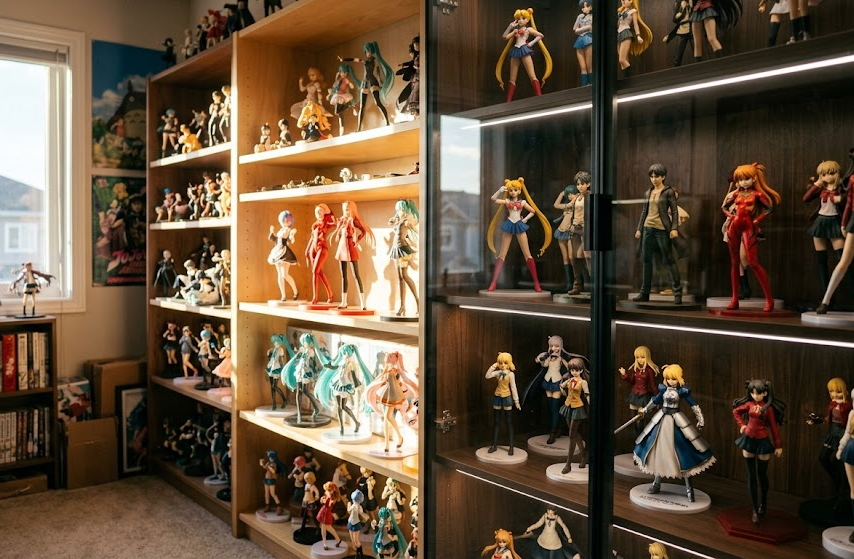
How UV Affects Paint, Color, Plastics, and Resin
When collectors ask about uv light anime figures, they are usually worried about whether the damage is cosmetic or structural. In most cases, the first visible problem is cosmetic—but that still matters, especially for premium figures.
Paint fading and color shift
UV exposure can break down pigments in paint, especially on bright reds, blues, blacks, and delicate gradients. Over time, colors may look washed out, uneven, or slightly chalky. On expensive scale figures, even mild fading can noticeably reduce display quality.
Yellowing in plastics and clear parts
White plastics, pale paint, transparent effect parts, and clear bases can be especially vulnerable. A figure may not look “damaged” all at once, but collectors sometimes notice that formerly bright white sections start looking cream, beige, or slightly yellow.
Resin stress and surface change
Resin figures are often prized for sculpt quality, but resin is not immune to light damage. Prolonged exposure can contribute to discoloration, surface dullness, and long-term material stress. Resin can also be less forgiving if environmental heat and light combine in a bright room.
PVC aging under bad display conditions
PVC is common, practical, and often durable, but that does not make it invincible. PVC can still fade, yellow, or soften faster when a figure sits in a sunny location for months.
The useful takeaway is this: sunlight -> UV light -> paint fading and material aging is a real chain, even if the figure never visibly melts. Collectors should think in years of exposure, not just one hot afternoon.
Warning Signs of Fading, Yellowing, or Surface Change
If you are not sure whether light is already affecting your display, watch for these warning signs:
- one side of the figure looks lighter than the other
- white, cream, or translucent parts start turning yellow
- painted areas lose depth or look flatter than before
- gloss and matte finishes become uneven
- resin or plastic surfaces appear duller in the most exposed spots
- the side facing the window ages faster than the shaded side
A simple collector habit is to inspect figures from multiple angles every few weeks, especially in bright rooms. If one side is clearly aging faster, that is your signal to change placement before the damage becomes permanent.
Best Placement and Protection Strategies
The best way to protect anime figures from sunlight is to reduce cumulative exposure without making your room miserable to live in. You do not need a museum setup, but you do need a smarter display plan.
Keep figures out of direct sun
This is the non-negotiable rule. Do not place figures on windowsills, open desks beside strong afternoon light, or shelves that receive a visible sunbeam every day.
Increase distance from windows
Even a few feet matters. A figure deep inside a room or inside a cabinet away from the window is safer than one sitting right beside the glass.
Use curtains, blinds, or UV window film
If your room is naturally bright, window control is often the best upgrade. Sheer curtains help diffuse light, blackout curtains reduce peak exposure, and UV-reducing film can help cut harmful light without making the room feel cave-like.
Prefer LED display lighting
Collectors who want illuminated shelves should usually choose LEDs. Good LED strips or cabinet lights are far safer than relying on sunlight for “natural display lighting.” Keep brightness reasonable and avoid pressing lights too close to delicate surfaces.
Rotate the display in difficult rooms
If you cannot fully avoid daylight, rotate figure positions occasionally so one side is not always taking the same exposure. This does not remove the problem, but it can reduce uneven aging.
Use enclosed cabinets when possible
A cabinet will not magically block all UV unless the material is treated for that, but it does help create a more controlled display environment, reduce dust, and make it easier to position figures away from direct window paths.
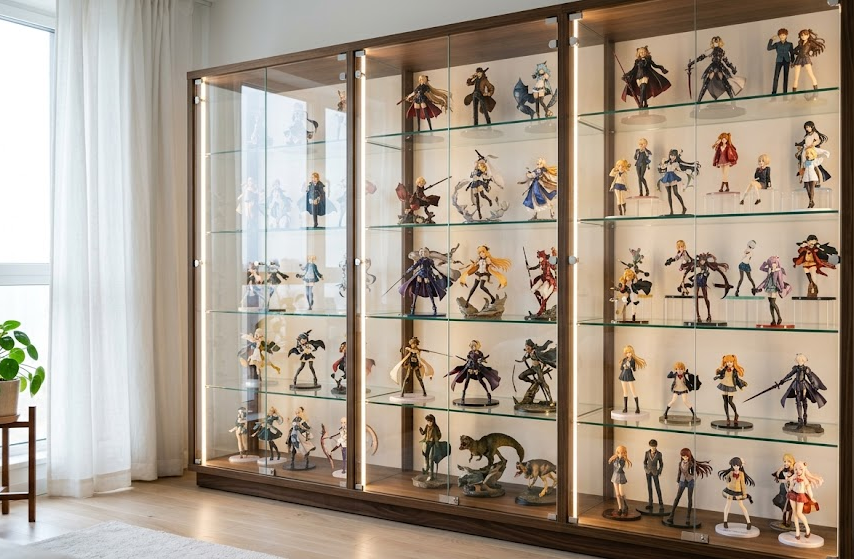
What Collectors Should Do in Bright Rooms or Window-Heavy Setups
Some collectors do not have the luxury of a dark hobby room. If you live in a sunny apartment, studio, or room with large windows, the goal is risk reduction, not perfection.
Use this protection checklist:
- avoid shelves that receive repeated direct sun during peak daylight hours
- place figures on walls that do not face the strongest window exposure
- use blinds, curtains, or UV film during the brightest parts of the day
- choose LED cabinet lighting instead of depending on sunlight for visibility
- keep premium resin figures and white or translucent figures in the safest spots
- check exposed figures regularly for fading, yellowing, or uneven color
- rotate especially vulnerable pieces if the room has unavoidable ambient daylight
Collectors with premium statues, signed pieces, rare exclusives, or older figures should be more conservative. Light damage is often slow, but once paint fades or material yellows, recovery is limited or impossible.
Are Some Figures More Vulnerable Than Others?
Yes. Some anime figures are more likely to show light damage sooner than others.
Higher-risk examples include:
- figures with white, cream, or pastel-heavy paint schemes
- clear effect parts, translucent hair, and transparent bases
- resin statues with premium paintwork or delicate finish transitions
- older figures whose materials or coatings may already be aging
- figures displayed in the same bright location year-round
This does not mean dark-colored PVC figures are immune. It just means vulnerability is uneven, and collectors should give the safest spots to the pieces that have the most to lose.
Summary Takeaway
Yes, sunlight and UV light can damage anime figures, especially through paint fading, yellowing, and gradual material stress. Direct sunlight is the main threat, indirect sunlight still matters over time, and LED lighting is usually the safer choice for collectors who want to preserve paint, color, PVC, and resin.
If you want your figures to age well, the smartest move is not complicated: control the light before the light controls the collection.
FAQ
Does indirect sunlight damage anime figures?
Yes, indirect sunlight can damage anime figures over time if the exposure is bright and consistent enough. It is less risky than direct sunlight, but daily exposure near windows can still fade paint and yellow sensitive materials.
Are LED lights safe for anime figures?
Most standard LED lights are much safer than sunlight because they usually produce far less UV and less heat. They are still best used in moderation, with reasonable brightness and some distance from the figure.
Can resin figures fade in sunlight?
Yes, resin figures can fade or discolor in sunlight. Resin is often used for premium display pieces, so even subtle color change or surface dullness can be noticeable.
How far from a window should anime figures be displayed?
There is no perfect universal distance because window size, sun direction, and room brightness all matter. In practice, farther is better, and figures should be kept out of any spot that receives repeated direct sun or strong all-day daylight.