How to Store Anime Figures Safely During Moves or Long-Term Rotation
Anime figures store best in cool, dry, low-pressure conditions with fragile parts protected, original packaging used when practical, and no heavy stacking or heat exposure. If you are planning a move or rotating part of your collection off the shelf, the safest approach is to reduce pressure, control humidity, isolate small accessories, and pack each figure so painted surfaces never rub directly against hard plastic or other figures.
Quick Answer: Safest Storage Conditions for Anime Figures
If you need the best way to store anime figures, think in terms of environment first and packing second. The storage area should stay cool, dry, shaded, and stable. The figures themselves should be protected from pressure, friction, heat buildup, moisture, and loose accessory loss.
For most collectors, original packaging is still the safest option for moves and longer storage because it is shaped for the figure and usually includes support trays for fragile parts. But original boxes are not the only solution. If those boxes are gone, you can still preserve anime figures safely by wrapping them correctly, supporting delicate areas, using clean compartments, and avoiding cramped containers that let pieces shift in transit.
Storage condition checklist
- keep storage temperature as stable as possible
- avoid direct sunlight, radiators, hot attics, and car trunks for extended periods
- keep humidity low to moderate rather than damp or fluctuating
- prevent painted parts from rubbing against each other
- do not let heavy boxes press down on heads, hair tips, weapons, or bases
- bag or label accessories separately so they do not disappear during a move
- check stored figures occasionally instead of forgetting them for years
When to Keep Figures in Original Boxes vs Alternate Containers
Original packaging is usually best for high-value or fragile figures
Collectors asking how to store anime figure boxes often already know the answer emotionally: boxes take space, but they are still useful. Original packaging matters most when the figure has thin hair strands, extended arms, effect parts, multiple faces, or resale value you want to protect later.
Original packaging helps because the blister tray supports the figure in the shape it was sold in. That reduces movement during transport and lowers the chance of paint transfer, bent parts, or missing extras. Original packaging also helps with authenticity, completeness, and easier resale if you ever rotate a figure out of your collection permanently.
Alternate containers make sense when boxes are gone or storage is tight
If you no longer have the original box, use a clean hard-sided container with internal separation instead of dropping multiple figures into one tote. The goal is not just to fit everything. The goal is to stop movement, pressure, and direct surface contact.
Boxed vs unboxed comparison
| Storage approach | Best for | Main advantage | Main risk |
|---|---|---|---|
| Original box and blister | scale figures, statues, expensive pieces, long-term storage | shape-matched protection and accessory organization | takes more space |
| Hard plastic bin with wrapped individual figures | collectors without original boxes | flexible storage and easier stacking | poor wrapping can still cause rubbing |
| Soft tote or loose cardboard box | short emergency transport only | cheap and easy to get | pressure damage, shifting, lost parts |
| Open shelf covered with cloth | very short display rotation only | quick access | dust, humidity, accidental knocks |
How to Wrap Figures and Separate Fragile Parts
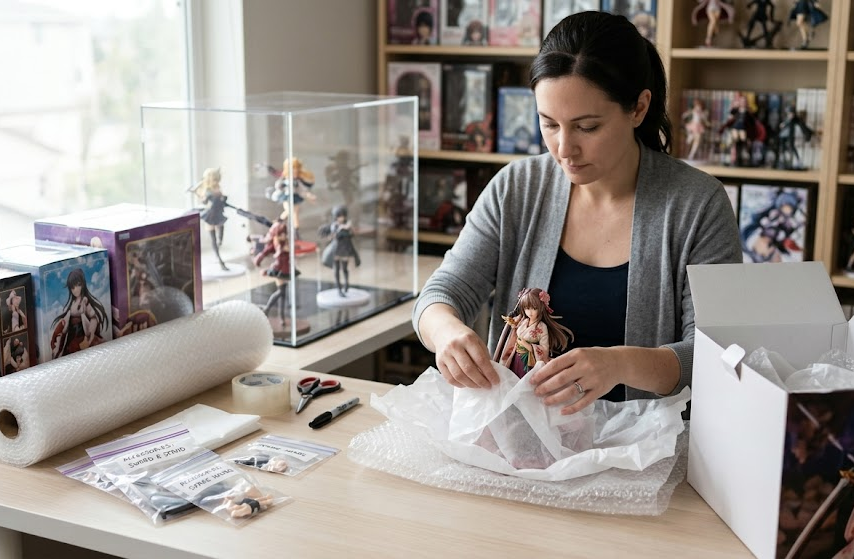
The safest anime figure storage starts with disassembly where practical. Remove swappable arms, weapons, wings, support rods, and face plates if the design allows it. Do not force pieces that feel stuck. If a part was never intended to be removed easily, forcing it can do more harm than leaving it attached and cushioning around it.
Packing steps
- Dust the figure lightly before storage so grit does not grind into paint.
- Remove loose accessories and place each set in a labeled small bag.
- Wrap the main figure in acid-free tissue, soft non-abrasive paper, or a smooth plastic sleeve that does not grip paint.
- Add bubble wrap outside that inner protective layer rather than directly against delicate painted surfaces.
- Cushion empty space so the figure cannot slide around inside the container.
- Keep bases, pegs, support rods, and effect parts in clearly labeled compartments.
- Put the heaviest items at the bottom, but never let them press directly on fragile sculpted details.
A simple rule helps here: protect surfaces first, then protect structure. Paint transfer usually comes from rubbing. Warping and breakage usually come from pressure, heat, or bad stacking.
Storage Risks From Heat, Moisture, Pressure, and Stacking
Heat exposure is one of the fastest ways to ruin stored figures
Heat can soften PVC, encourage warping, stress glued joints, and make plasticizer issues worse over time. That means anime figure storage in garages, attics, sun-facing rooms, or parked vehicles is a bad gamble even if the figures are packed well.
Humidity creates slow problems collectors notice too late
Humidity does not always crack a figure overnight, but it can encourage sticky residue, packaging wear, mold in paper inserts, and a general decline in condition. Original packaging and enclosed storage boxes help only when the environment itself is still reasonably dry.
Pressure and stacking damage are common during moves
A moving box may look safe from the outside while crushing everything inside. Heavy stacking can bend thin swords, stress ankles, deform hair tips, and crack support parts. This is why the best way to store anime figures during a move is often to use more smaller boxes instead of one overloaded carton.
Moving-Day Packing Tips for Statues and Scale Figures
Moving is different from ordinary storage because vibration, sudden stops, and human error all enter the equation.
Use these moving-day habits:
- transport your most fragile figures separately if possible
- keep premium statues and scale figures upright whenever the original packaging expects that orientation
- label boxes as fragile and note which side should face up
- avoid letting movers compress figure boxes under books, tools, or kitchenware
- keep a separate essentials box for tiny parts, alternate hands, pegs, and manuals
- unpack the most delicate figures early so they are not left in a hot vehicle or crowded hallway
If a figure has a known weak point, such as long twin tails, floating effect parts, or thin ankles, build extra cushioning around that zone rather than treating the figure as uniformly sturdy.
Rotation System for Collectors With Limited Display Space
Long-term rotation is not just about getting figures off the shelf. It is about making sure the figures that are not currently displayed can come back out in the same condition.
A practical rotation system looks like this:
- keep a small inventory list of what is displayed and what is stored
- group figures by franchise, scale, or box size so repacking is predictable
- reserve original packaging for your most delicate or most valuable pieces
- use clearly labeled storage boxes so you are not reopening everything to find one base or face plate
- schedule periodic checks for humidity, odor, or pressure damage
- rotate figures in and out before storage becomes a forgotten graveyard
For collectors who want a cleaner temporary home between display cycles, a clear acrylic display case for collectibles and figures can work as a dust-protected rotation option for selected pieces that you still want visible and easy to inspect.
Should You Store Anime Figures in Their Boxes Forever?
Not always. If shelf space is limited, it makes sense to rotate display pieces and store some of them safely. The real answer is that original packaging is best when the figure is fragile, valuable, hard to replace, or likely to be moved again soon. For sturdier prize figures or lower-risk items, a well-padded alternate anime figure storage box can be perfectly acceptable.
What matters is not whether a figure is boxed or unboxed in theory. What matters is whether the actual storage setup controls heat exposure, humidity, pressure, friction, and accessory loss.
FAQ
Should you keep anime figures in their boxes?
Yes for fragile, premium, or resale-sensitive figures, especially during moves or longer storage. Original packaging usually offers the best shape-matched support and helps keep accessories complete.
How do you store anime figures without the original box?
Use a rigid container, wrap each figure individually with a non-abrasive inner layer, cushion empty space, separate accessories, and avoid stacking heavy items on top.
Can heat damage anime figures in storage?
Yes. Heat exposure can warp PVC, stress joints, worsen stickiness, and damage packaging, which is why hot cars, attics, and direct sun are risky storage choices.
How do you pack anime figures for a move?
Disassemble removable parts, label accessories, wrap surfaces gently, support fragile zones, and use smaller boxes that keep figures stable instead of one oversized box packed under pressure.
Summary Takeaway
How to store anime figures safely comes down to controlled conditions and careful packing. Use original packaging when you can, use rigid organized containers when you cannot, keep humidity and heat exposure in check, and never let fragile parts carry weight during moves or long-term rotation.