Why Anime Figures Get Sticky Over Time and How to Clean Them Safely
Anime figures usually get sticky because of plasticizer migration, heat, humidity, or long-term enclosed storage, and they should be cleaned with gentle materials and tested spot by spot. In most cases, sticky residue on PVC figures can be improved safely, but harsh solvents, heavy scrubbing, and rushed drying can make the finish worse.
Quick Answer: What Causes Sticky Residue on Figures
If your anime figures feel tacky, oily, or slightly grimy even after sitting on a shelf, the most common cause is plasticizer slowly migrating out of PVC over time. Heat exposure, humidity, cigarette smoke, cooking residue, dust buildup, and long-term storage in a sealed box or cabinet can all make that sticky residue more noticeable.
The good news is that many sticky anime figures can be cleaned safely with lukewarm water, a mild soap solution, a soft microfiber cloth, and patience. The bad news is that not every sticky surface is just dirt. Sometimes the residue points to long-term material degradation, which means you can improve the surface but not always restore it completely.
Plasticizer, Heat, Humidity, and Storage Factors
Why PVC figures get sticky
Many anime figures use PVC, and PVC often contains plasticizer to keep parts slightly flexible instead of brittle. As figures age, especially in warm or poorly ventilated environments, some of that plasticizer can migrate to the surface. That creates the classic sticky action figures problem collectors notice after months or years.
Cause table
| Cause | What happens | Typical signs |
|---|---|---|
| Plasticizer migration | Surface compounds slowly move outward | tacky feel, slight shine, residue returning after cleaning |
| Heat exposure | Speeds up material change and softening | stickiness worsens in summer or near windows |
| High humidity | Holds moisture and grime on the surface | clammy feel, faster dust buildup |
| Enclosed storage | Traps off-gassing and residue close to the figure | boxed figures feel sticky after long storage |
| Airborne grime | Dust, smoke, and kitchen residue cling to the surface | yellowing film, dull finish, uneven grime |
Why storage can make the problem feel worse
Collectors often assume a boxed figure should come out cleaner than a displayed one. In reality, long-term sealed storage can intensify anime figures sticky problems because the figure sits in a low-airflow space where migrated compounds and trapped humidity linger around the surface. Figures stored in attics, hot closets, or poorly ventilated cabinets are especially vulnerable.
How to Test a Small Area Safely
Before cleaning the whole figure, test a hidden area first. The underside of a base, the back of a leg, or an area under hair is usually safer than a highly visible painted surface.
Use this quick test method:
- Dampen a cotton swab with plain lukewarm water.
- Touch a very small area without scrubbing hard.
- Wait a minute and check whether paint lifts, color transfers, or the finish becomes dull.
- If nothing changes, test again with a tiny amount of diluted mild soap.
- Dry the area gently with a clean microfiber cloth.
This step matters because older figures, garage kits, and heavily painted surfaces can react differently. If paint transfer appears, stop and move to the gentlest possible cleaning only.
Safe Cleaning Steps for Sticky Surfaces
If the test area looks stable, follow these safe cleaning steps.
1. Remove loose dust first
Use a soft dry brush, air blower, or clean microfiber cloth to remove loose dust. Do not grind dust into the sticky surface with pressure.
2. Prepare a gentle cleaning mix
Use lukewarm water with a tiny drop of mild dish soap. You are not trying to degrease a pan. You only want enough cleaning power to lift residue gradually.
3. Wipe in small sections
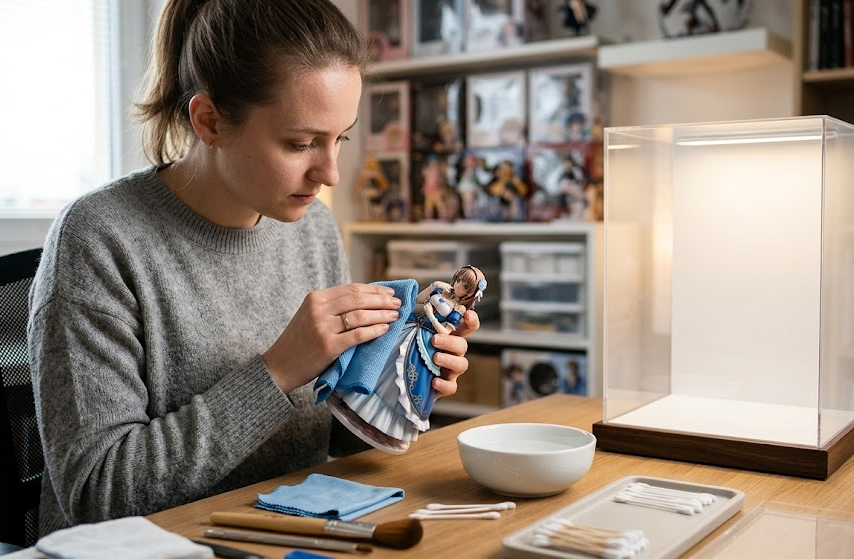
Dip a microfiber cloth or cotton swab in the solution, wring it out well, and clean one small section at a time. This is the safest approach for how to clean sticky anime figures without flooding seams or pooling water in crevices.
4. Use light pressure only
Do not scrub aggressively. Let repeated gentle passes do the work. Sticky residue often loosens in layers rather than disappearing instantly.
5. Rinse away soap film
Follow with a second cloth lightly dampened with plain water so soap does not dry back onto the figure.
6. Dry fully before reassembly or display
Pat dry with a clean microfiber cloth and let the figure air dry completely before putting parts back together or returning it to a case.
What You Should Never Use on Sticky Figures
These mistakes cause more damage than the residue itself:
- acetone or nail polish remover
- paint thinner or strong degreasers
- abrasive sponges or melamine foam used aggressively
- hard-bristle brushes on painted areas
- boiling water or high heat
- alcohol on delicate paint unless you are already sure the finish can tolerate it
Collectors searching for anime figure cleaning advice sometimes jump straight to stronger solvents because the residue feels oily. That is risky. Solvents may strip paint, haze clear parts, or permanently change the finish.
When Residue Means Long-Term Material Degradation
Sometimes the stickiness keeps returning even after a careful wash. That often means the figure is not just dirty. The material itself is aging.
Signs of deeper degradation include:
- stickiness returns quickly after cleaning
- the surface looks glossy in an unnatural way
- a strong plastic smell is present after opening storage
- soft PVC parts feel slightly rubbery compared with before
- yellowing, paint instability, or surface tackiness appear together
In that situation, cleaning can still improve handling and appearance, but it may not be a permanent fix. Older PVC figures and lower-grade plastics are more likely to develop recurring sticky residue over time.
How to Prevent Sticky Anime Figures During Storage and Display
Prevention matters because the same conditions that caused the problem can bring it back.
Prevention checklist
- keep figures away from direct sunlight and radiators
- avoid hot cars, attics, and unventilated closets
- control humidity when possible
- dust figures regularly so grime does not bond to tacky surfaces
- give stored figures occasional airflow instead of sealing them untouched for years
- avoid stacking figures in soft plastic bags that trap residue against paint
- use clean, stable display storage instead of overcrowded sealed spaces
If you want a more controlled storage setup, a dustproof solution such as this clear acrylic display case for collectibles and figures can be a practical next step for keeping dust off the surface while making periodic inspection easier.
Can Sticky Anime Figures Be Fixed Completely?
Sometimes yes, sometimes not. If the residue is mostly surface grime plus mild plasticizer bleed, you can often make the figure feel dramatically better. If the material is already in a heavier aging stage, cleaning helps manage the problem but may not erase it forever.
A good collector mindset is to treat sticky residue as a maintenance issue first and a restoration issue second. Start gentle, test carefully, and accept that older materials may need occasional upkeep.
FAQ
Why do anime figures become sticky in storage?
Because enclosed storage can trap heat, humidity, and off-gassed plasticizer close to the figure. Instead of staying stable, the residue lingers on the surface and becomes more noticeable over time.
Can sticky anime figures be fixed completely?
They can often be improved a lot, but not always restored permanently. If the underlying PVC is degrading, some tackiness may return later.
Does heat make anime figures sticky?
Yes. Heat exposure speeds up plasticizer migration and can make existing residue feel worse, especially with PVC figures displayed near windows or stored in warm rooms.
What should you never use on sticky figures?
Avoid acetone, paint thinner, harsh degreasers, abrasive scrubbers, and any cleaner that can strip paint or haze plastic. Gentle cleaning is slower, but it is much safer.
Summary Takeaway
Why do anime figures get sticky? Usually because PVC plasticizer slowly migrates to the surface and gets worse with heat, humidity, grime, or long-term enclosed storage. If you need to know how to clean sticky anime figures safely, the best method is a hidden-spot test, gentle soap-and-water cleaning, light pressure, and better storage habits afterward.