Best Lighting for Anime Figure Displays: LED Color, Brightness, and Heat Tips
For most anime figure displays, low-heat LED lighting with balanced color temperature and moderate brightness gives the best mix of visibility, shelf aesthetics, and material safety. In practice, that usually means choosing quality LED strips or compact LED bars in the roughly neutral-to-slightly-cool range, avoiding harsh hotspot placement, and keeping enough distance that the light improves paint detail without adding unnecessary heat stress.
Good figure display lighting is not just about making a shelf brighter. It changes how skin tones, metallic paint, translucent effect parts, and shadows look, and it can also affect long-term safety if the setup runs hot or blasts one figure from too close. The best lighting for anime figure displays makes sculpt details clearer, preserves color balance, and keeps the display pleasant to look at for more than five minutes.
Quick Answer: The Best Default Lighting Choice for Most Collectors
If you want one safe default, use LED lighting with moderate brightness and a balanced color temperature around neutral white. That setup works well for most anime figures because it keeps heat low, avoids the yellow cast that can muddy paintwork, and still gives enough contrast for faces, hair sculpting, and costume details to stand out.
A simple collector-friendly choice framework looks like this:
- Choose LED first because it gives the best balance of low heat, efficiency, and flexible placement.
- Choose neutral to slightly cool white if you want colors to stay crisp without turning the shelf sterile.
- Choose moderate brightness so your display looks intentional instead of overexposed.
- Place the light above or slightly in front of the figures rather than blasting directly into their faces.
- Keep some distance from the figure surface so the light flatters details without creating heat concentration.
If your shelf is enclosed or dust-protected, a setup paired with a clear acrylic display case for collectibles and figures can work especially well because controlled lighting and a cleaner display environment usually make figure colors look sharper with less visual clutter.
Why LED Is Usually Safer Than Hotter Alternatives
For action figure display lighting and anime figure display case lighting, LED is usually the right answer because it produces far less heat than older bulbs and is much easier to position inside shelves, cabinets, and enclosed cases. That matters because anime figures are still made from materials that can dislike prolonged heat, concentrated warmth, or direct exposure from a poorly placed lamp.
Collectors mainly care about three things here:
- Heat output
- Color quality
- Placement flexibility
LED wins on all three for most home displays.
Why lower heat matters
Heat does not have to be extreme to become a bad idea over time. Repeated warmth in a tight enclosed space can add stress to softer materials, adhesives, thin parts, and painted surfaces. Most figure damage fears are more about long-duration exposure and bad placement than one dramatic event, which is exactly why low-heat lighting is the safer baseline.
Why LED strips and bars are popular
An anime figure display case lighting kit often uses LED strips, puck lights, or slim light bars because they can be hidden more easily along shelf edges, cabinet frames, or the top interior panel of a case. They also spread light more evenly than a single hot spotlight.
That does not mean every LED setup is automatically good. Cheap strips can have ugly color, visible diode dots, uneven brightness, or poor adhesive backing. But as a category, LED still gives collectors the best starting point.
Choosing Color Temperature for Anime Figures and Statues
Color temperature changes the mood of the whole display. It also changes how paint colors read to your eyes and to your camera if you take shelf photos.
For most collectors, the practical decision is not warm versus cool in the abstract. It is whether you want the shelf to feel:
- warmer and softer
- cleaner and more neutral
- brighter and sharper, but potentially less natural
Warm white lighting
Warm lighting can make a display feel cozy and atmospheric, especially in living rooms or darker collector corners. It can look great with wood shelving, warmer wall colors, and figures with rich reds, golds, or vintage styling.
The downside is that very warm light can make whites look creamier and can reduce the crispness of cooler paint details. Blue hair, silver armor, ice effects, and pale costumes may lose some of their intended contrast.
Neutral white lighting
Neutral white is the safest all-around choice for figure display lighting. It usually gives the best balance between realism and shelf appeal. Skin tones tend to stay believable, darker paint lines remain visible, and bright anime color palettes still pop without feeling too clinical.
If you are undecided, this is usually the best place to start.
Cool white lighting
Cooler lighting can make modern shelves look very clean and can emphasize sharp edges, glossy surfaces, and futuristic or mecha-adjacent displays. It can also photograph well if your display theme already leans crisp and high-contrast.
But if pushed too far, cool light can make the shelf feel sterile and can wash out softer tones. That is why it works best when used intentionally rather than as an automatic "brighter must be better" choice.
How Much Brightness Is Enough Without Washout
Too little brightness makes figures disappear into shadow. Too much makes the display look flat, reflective, and strangely cheap. The goal is not maximum output. The goal is controlled visibility.
As a rule, anime figure display lighting should be bright enough to:
- reveal facial details clearly
- separate the figure from the background
- show texture in hair, fabric sculpting, and accessories
- keep shadow shape instead of erasing all depth
Signs your display is too bright:
- faces lose subtle paint detail
- glossy parts create distracting glare
- acrylic doors reflect the light more than the figure does
- bright white costumes or pale skin tones start looking blown out
Signs your display is too dim:
- the shelf looks muddy from normal viewing distance
- darker characters disappear into the background
- color transitions and sculpt edges are hard to read
- the display only looks good when photographed with extra exposure
Brightness control matters more than brute power
Dimmers are one of the easiest upgrades for an anime figure display case lighting kit. A dimmable setup lets you keep enough output for daytime viewing while backing off at night, which usually makes the shelf look more expensive and less harsh.
Diffusers help too. A diffuser softens hotspots and reduces that dotted-strip look many cheap setups suffer from.
LED Lighting Comparison Table
| Lighting type | Best use case | Heat output | Color control | Visual result | Main caution |
|---|---|---|---|---|---|
| LED strip lights | Shelf edges, cabinet frames, enclosed cases | Low | Good to excellent depending on quality | Even ambient glow | Cheap strips can look patchy or dotty |
| LED light bars | Top-down shelf lighting, cleaner premium setups | Low | Usually good | Smooth and directional | Need enough width coverage |
| LED puck lights | Accent lighting for small zones | Low to moderate | Varies | Focused highlights | Can create hotspots and glare |
| Desk lamp or spotlight | Open shelf accenting | Moderate to high depending on bulb | Varies | Dramatic emphasis | Easier to overheat or overexpose one figure |
| Older halogen or hot bulbs | Rarely recommended for displays | Higher | Varies | Strong highlight potential | Unnecessary heat risk for most collectors |
Heat, Wiring, and Placement Mistakes to Avoid
Even the best LED setup can become a bad display solution if the installation is sloppy.
Mistake 1: Putting the light too close
Low heat is not the same as zero heat. If a strip, puck, or bar is pressed too close to the top of a figure, you create concentrated light and unnecessary warming in one small area. Give the light enough breathing room so the display looks balanced rather than aggressive.
Mistake 2: Lighting straight into the face from the front
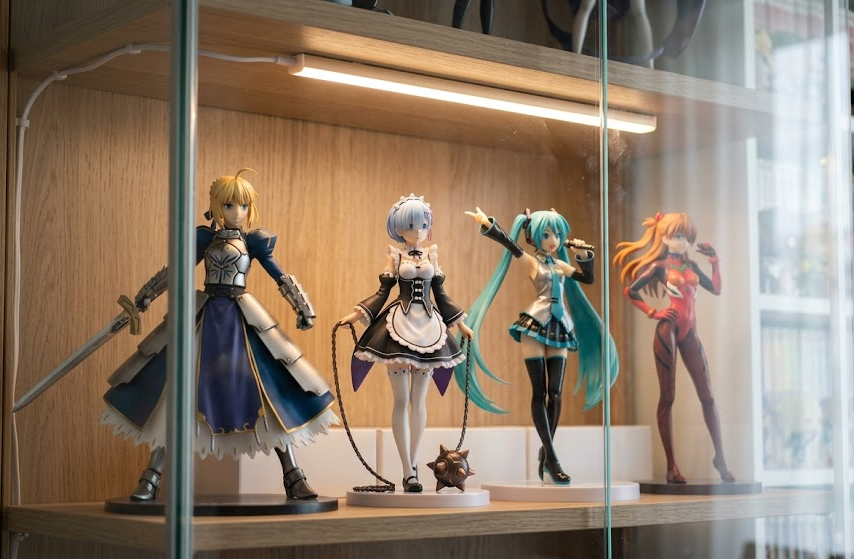
Direct front-facing light can flatten the sculpt and create unpleasant glare on glossy eyes, hair, visors, or acrylic doors. Slightly top-front placement usually works better because it keeps the figure readable while preserving shadow shape.
Mistake 3: Ignoring enclosed-case heat buildup
A display case can make lighting look more polished, but enclosed cases also hold warmth more easily than open shelves. That does not mean you should avoid them. It means you should pay more attention to low-heat LEDs, moderate brightness, and sensible runtime.
Mistake 4: Messy cable routing
A beautiful anime figure display case lighting setup looks cheap fast when wires cross the viewing area. Run cables along edges, behind uprights, or through the rear when possible. Clean routing improves both aesthetics and safety.
Mistake 5: Choosing the cheapest possible kit
The absolute cheapest lighting kits often fail in the exact ways collectors hate most: weak adhesive, ugly color cast, visible diode spacing, poor dimming, and unreliable connectors. Paying a little more for stable light quality usually makes a visible difference.
Lighting Ideas for Shelves, Cabinets, and Enclosed Cases
Different display furniture needs slightly different lighting logic.
Open shelves
Open shelves benefit from soft top lighting or top-front lighting that keeps figures visible without blasting the whole room. LED bars or carefully placed strips usually work better than a single spotlight because they maintain more even coverage.
Glass-door cabinets
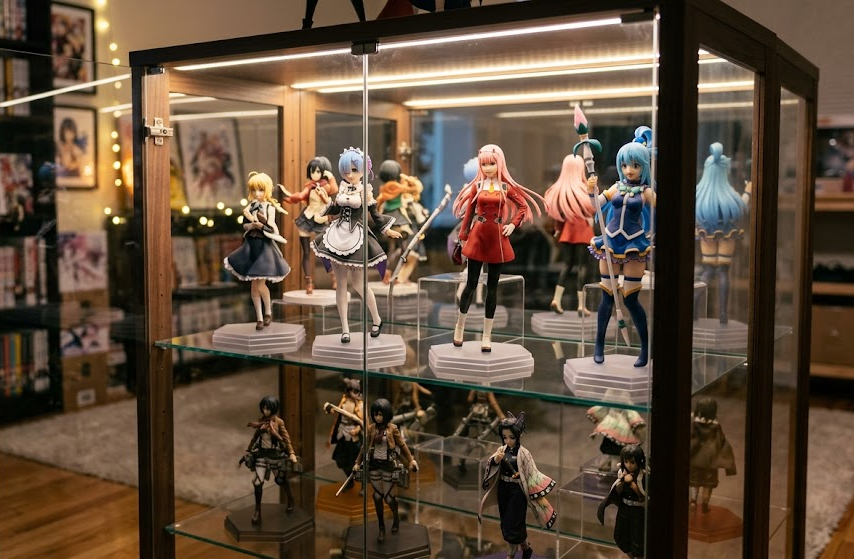
Cabinets often look best with lighting hidden along the top interior edges or side frames. This creates a more premium showroom effect and helps figures separate from the darker back panel. In cabinets with reflective doors, diffused light is especially helpful because it keeps reflections from becoming distracting.
Small enclosed display cases
Smaller cases need restraint. Because the space is tighter, it is easier to overdo brightness and create glare. A short low-heat strip or a compact bar is often enough. In these setups, less is usually better.
Mixed displays with risers
If your shelf uses risers, try to light for the whole composition rather than one row only. Good figure display case lighting should help front-row details and still leave enough illumination for the upper or rear figures to read clearly.
A Simple Selection Checklist for Collectors
Choose your lighting based on these questions:
- Is the display open or enclosed? Enclosed setups need more caution about heat buildup and glare.
- Do you want neutral realism or stronger mood? Neutral white is the easiest safe default.
- Are your figures glossy, metallic, or behind acrylic doors? If yes, control glare before adding more brightness.
- Do you photograph your shelf often? Balanced color temperature matters more when you want photos to match what your eyes see.
- Do you need ambient glow or targeted emphasis? Strips and bars are better for overall shelf lighting; puck lights are better for accents.
- Will the lights stay on for long periods? Prioritize low-heat LEDs and avoid overpowered setups.
Summary Takeaway
The best lighting for anime figure displays is usually a low-heat LED setup with balanced color temperature, moderate brightness, and careful placement. If you want the safest all-around result, start with quality LEDs, keep the light indirect enough to preserve sculpt depth, and tune brightness so your figures look vivid rather than washed out.
FAQ
Are LED strip lights safe for anime figures?
Yes, in most cases LED strip lights are the safest practical choice for anime figure displays because they run cooler than older bulbs and are easy to install with even coverage. Safety still depends on sensible placement, decent product quality, and not pressing the light too close to the figures.
What color temperature looks best on anime figures?
For most collections, neutral to slightly cool white looks best because it keeps colors clear without making the display look too yellow or too clinical. Warm light can still work well if you want a softer mood and your shelf style supports it.
Can display lights damage anime figures?
They can if the setup creates too much heat, concentrates light too closely, or uses hotter bulbs in a confined space. The bigger risk is usually long-term exposure from poor placement, not a brief viewing session.
How bright should an anime figure display be?
Bright enough to show faces, paint detail, and shelf depth clearly, but not so bright that highlights blow out and acrylic surfaces start reflecting more than the figures themselves. Moderate brightness with dimming control is usually the sweet spot.