How to Clean Anime Figures Without Damaging Paint, Glue, or Delicate Parts
Most anime figures should be cleaned with a soft makeup brush or anti-static detailing brush, a gentle air blower, and careful spot treatment only when needed. The safest default is dry cleaning first, because soaking, scrubbing, alcohol, harsh cleaners, and too much pressure are the fastest ways to damage paint, weaken glue, or snap delicate parts.
If you have ever worried about rubbing a face print, loosening a tiny accessory, or bending a thin hair tip while dusting, you are not overthinking it. Premium PVC and painted figures can look durable on the shelf, but many of the most visible details are exactly the parts that get damaged by rushed cleaning.
Quick answer: the safest cleaning method for most anime figures
For most PVC anime figures, the best way to clean anime figures from dust is this:
- Wash and dry your hands first
- Move the figure to a stable, clean work surface
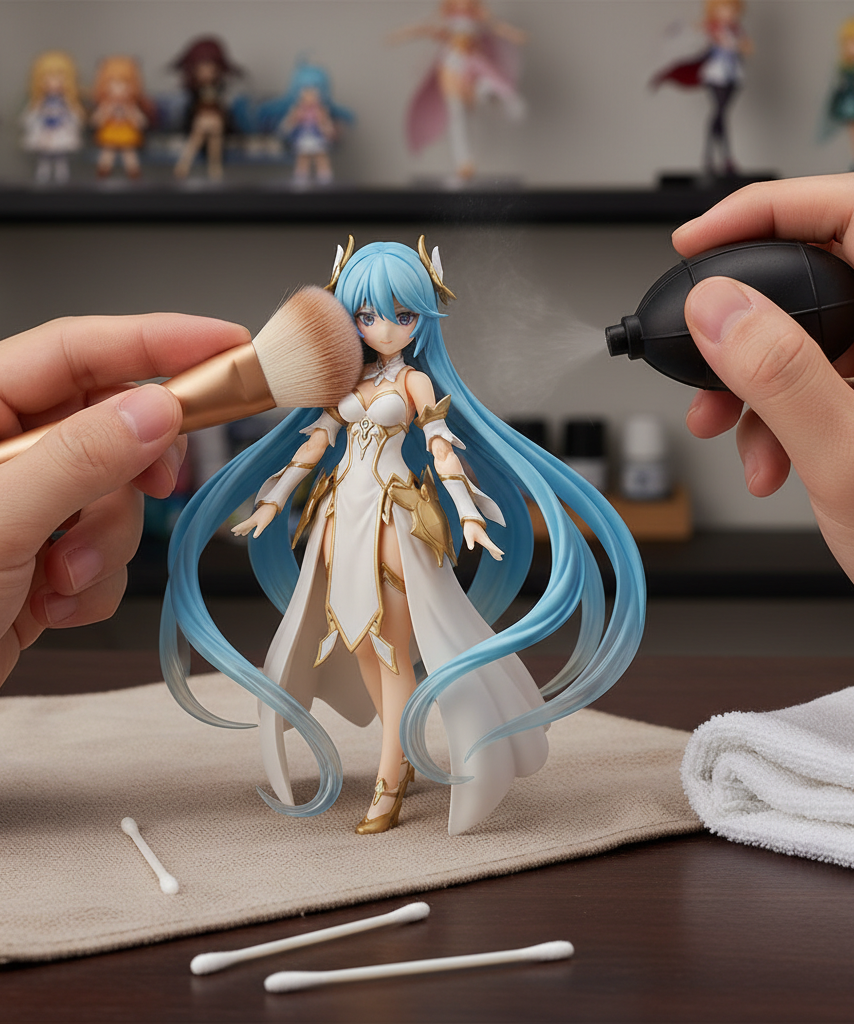
- Use a soft brush to lift dust instead of wiping it across the paint
- Use a manual air blower to clear dust from creases and sculpted details
- Support delicate parts with one hand while cleaning with the other
- Use a barely damp microfiber cloth only for stubborn surface grime on sturdy, non-porous areas
- Dry the area immediately and never leave moisture sitting in seams, joints, or glued sections
That method works because it removes dust with minimal friction and minimal moisture, which is exactly what painted surfaces, glue joints, and fragile accessories need.
Safe cleaning checklist
Before you start, make sure you have the right setup:
- Soft makeup brush, camera lens brush, or anti-static hobby brush
- Manual air blower or bulb blower
- Clean microfiber cloth
- Cotton swabs for tiny crevices
- Distilled water for occasional spot cleaning
- A padded towel or soft mat for the work surface
- Good lighting so you can see dust trapped in sculpt details
Avoid using these unless you fully understand the material and finish:
- Household cleaners
- Alcohol or solvent-based sprays
- Paper towels
- Magic erasers
- Rough cloths
- High-pressure compressed air at close range
- Hot water or soaking methods
Step-by-step dry cleaning process
1. Prepare a safe workspace
Set the figure on a stable table covered with a folded microfiber towel or soft mat. This gives you grip and lowers the risk of chips if a small part slips from your hands.
Try not to clean a figure while it is still crowded inside a display shelf. You want room to turn it slowly, support the base, and inspect narrow points like fingers, ribbons, weapons, and hair tips.
2. Inspect the figure before touching anything
Before you start brushing, look for:
- thin hair strands
- glued accessories
- loose pegs
- fragile weapons or effect parts
- old repairs
- tacky areas caused by heat or humidity
This step matters because the best way to clean anime figures is not just about removing dust. It is about knowing where not to apply pressure.
3. Start with the gentlest dust removal first
Use your air blower first on recessed areas such as:
- under hair layers
- around collars and bows
- between fingers
- inside folds of clothing
- around bases and support rods
Keep the airflow gentle. The goal is to loosen dust, not blast the figure. If you use canned compressed air, keep it at a distance and avoid spraying at angles that can force propellant or moisture onto the surface. For most collectors, a manual blower is safer.
4. Brush dust off instead of wiping it around
Use a very soft brush and move dust away in light strokes. Brush from top to bottom so loosened dust falls away from cleaned sections.
The key is to let the bristles do the work. Do not scrub. Do not press hard. On painted faces or glossy sections, even a little extra pressure can create micro-abrasion over time.
If you are cleaning around a thin part, support that part gently with your other hand or stabilize the base so the figure does not flex.
5. Use microfiber only where it actually helps
A dry microfiber cloth can help on broad, sturdier areas such as:
- plain base surfaces
- smooth boots or shoes
- larger sections of clothing sculpt
- sturdy, untextured backs of figure bases
Even then, wipe lightly. Dust becomes abrasive when dragged across a painted finish, so the cloth should be a finishing step, not your main dust-removal tool.
When to use light damp cleaning and when to avoid it
Sometimes dust is not the only problem. You may find sticky residue, fingerprint oils, or a faint grime layer. That is when collectors start wondering how to clean action figures or anime figures with water.
The answer is: only in a limited, controlled way.
Light damp cleaning is usually safe when:
- the area is sturdy and non-porous
- the paint appears well sealed
- there are no exposed paper elements or decals
- the grime does not lift with dry cleaning
- you can dry the area immediately
Use a microfiber cloth or cotton swab that is barely damp with distilled water, not wet. Wipe the smallest area possible, then follow with a dry cloth right away.
Avoid damp cleaning when:
- the figure has obvious glued seams or repaired sections
- the part is thin, flexible, or under tension
- the paint finish looks delicate, old, or uneven
- the area includes face printing, metallic paint, or fine edge detail
- water could collect in joints, sockets, or enclosed cavities
If you need more than a tiny amount of moisture, stop and reassess. That is usually a sign the cleaning method is getting too aggressive for the risk level.
What to do around joints, hair tips, accessories, and glued parts
These are the areas where most accidental damage happens.
Joints and peg connections
If the figure has swappable parts or articulated sections, do not twist or pull them apart during routine cleaning unless necessary. Dust can usually be removed with a blower and soft brush while the parts remain assembled.
Moisture around joints is a bad idea because it can sit invisibly inside the connection point and encourage loosening, residue buildup, or long-term stickiness.
Hair tips and thin sculpted details
Long anime hair, ribbons, antennae, and fingertips often flex just enough to snap if they are bumped sideways. Brush along the natural line of the sculpt instead of across it, and support the main body of the part if possible.
Accessories and effect parts
Weapons, floating parts, clear effect pieces, and tiny hand accessories should be cleaned separately if they remove easily and safely. If they do not, leave them attached and clean around their attachment points carefully.
Glued parts and repaired areas
If a figure has a factory-glued seam or an old repair, treat that area as fragile even if it looks stable. Brush lightly and avoid moisture. Glue joints can weaken over time, especially in rooms with heat or humidity swings.
How often should anime figures be cleaned?
For most displayed figures, a light dusting every 2 to 4 weeks is enough. A more detailed inspection and careful cleaning every 2 to 3 months works well for open-shelf displays.
If your room has pets, open windows, strong HVAC airflow, or high traffic, dust will build up faster. In that case, shorter and gentler sessions are better than waiting until dust becomes thick and stubborn.
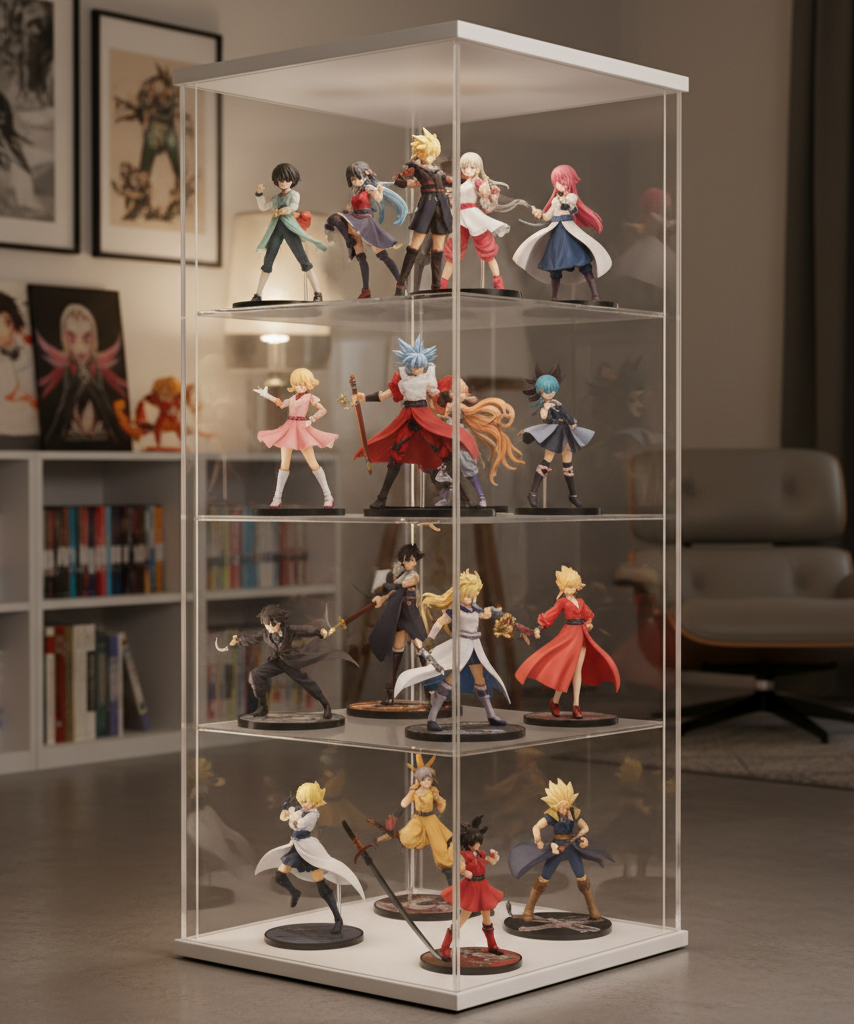
A good long-term strategy is prevention. Keeping figures in a dust-reducing enclosure, such as a transparent acrylic display case, can dramatically cut how often you need hands-on cleaning in the first place.
Common cleaning mistakes that damage figures
Using the wrong brush
A stiff brush can leave fine scratches or catch on tiny sculpt details. If the bristles feel even slightly firm on your skin, they are probably too harsh for painted figure surfaces.
Rubbing dust into the paint
This is one of the most common mistakes. Dust looks soft, but once it picks up grit from a room, it behaves more like a fine abrasive.
Using alcohol, strong cleaners, or soap mixtures casually
Collectors sometimes assume a stronger cleaner means a cleaner result. On figures, it often means dulled paint, cloudy clear parts, softened finish, or damaged glue.
Overusing compressed air
Compressed air is not automatically unsafe, but close-range blasts can be stronger than expected. In some cases, propellant or condensation can also create problems. That is why a manual bulb blower is usually the safer default.
Cleaning too fast
Most figure damage comes from speed: grabbing a figure one-handed, rushing around a thin accessory, or wiping first and thinking later.
Extra care tips for long-term anime figure care
If you want to keep your collection looking sharp over time, focus on prevention as much as cleaning:
- Keep figures out of direct sunlight to reduce fading and heat stress
- Avoid high humidity, which can affect paint feel and glue stability
- Dust shelves and nearby surfaces so less dust settles back onto the figure
- Leave enough space between figures to reduce bumping during cleaning
- Rotate especially delicate pieces into enclosed displays when possible
FAQ
Can you wash anime figures with water?
Usually, not in the way people mean by washing. Most anime figures should not be soaked or rinsed under running water. Controlled spot cleaning with a barely damp cloth is much safer than washing the whole figure.
What brush is safe for anime figures?
A very soft makeup brush, camera lens brush, or anti-static detailing brush is usually the safest choice. Avoid stiff craft brushes and anything with rough synthetic bristles.
Can compressed air damage anime figures?
Yes, it can if used too closely or too forcefully. High pressure can stress delicate parts or force moisture and debris where you do not want it. A manual air blower is safer for routine use.
How often should anime figures be cleaned?
Light dusting every few weeks is ideal for most open-display collections. Gentle, regular cleaning is much safer than infrequent aggressive cleaning.
Final takeaway
If you want to know how to clean anime figures without damaging paint, glue, or delicate parts, the safest rule is simple: use the least aggressive method that gets the job done. Start dry, use soft tools, support fragile areas, and treat moisture as a limited exception instead of the main method.
That approach keeps your figures cleaner, reduces stress on paint and glue, and helps expensive or sentimental pieces stay display-ready for much longer.