Anime Figure Scale Guide: What 1/7, 1/8, and 1/6 Really Mean for Space, Price, and Display
If you are new to collecting, anime figure scale labels can feel more confusing than helpful. A listing says 1/7, 1/8, or 1/6, but that fraction does not immediately tell you whether the figure will dominate a shelf, look tiny next to your other pieces, or quietly blow up your budget. That is why a practical anime figure scale guide matters. Scale is not just a technical spec. It is one of the fastest ways to predict how much space a figure will take, how much presence it will have in a display, and how expensive the purchase is likely to become.
For most collectors, the real question is not “Which scale is best?” It is “Which scale fits the way I want to buy, display, and live with figures?” A 1/8 scale piece can be the sweet spot for controlled budgets and moderate shelves. A 1/7 scale figure often feels like the modern middle ground for detail and display impact. A 1/6 scale figure can look amazing, but it asks more from your room, your shelves, and your wallet. Once you understand that tradeoff, scale labels stop looking abstract.
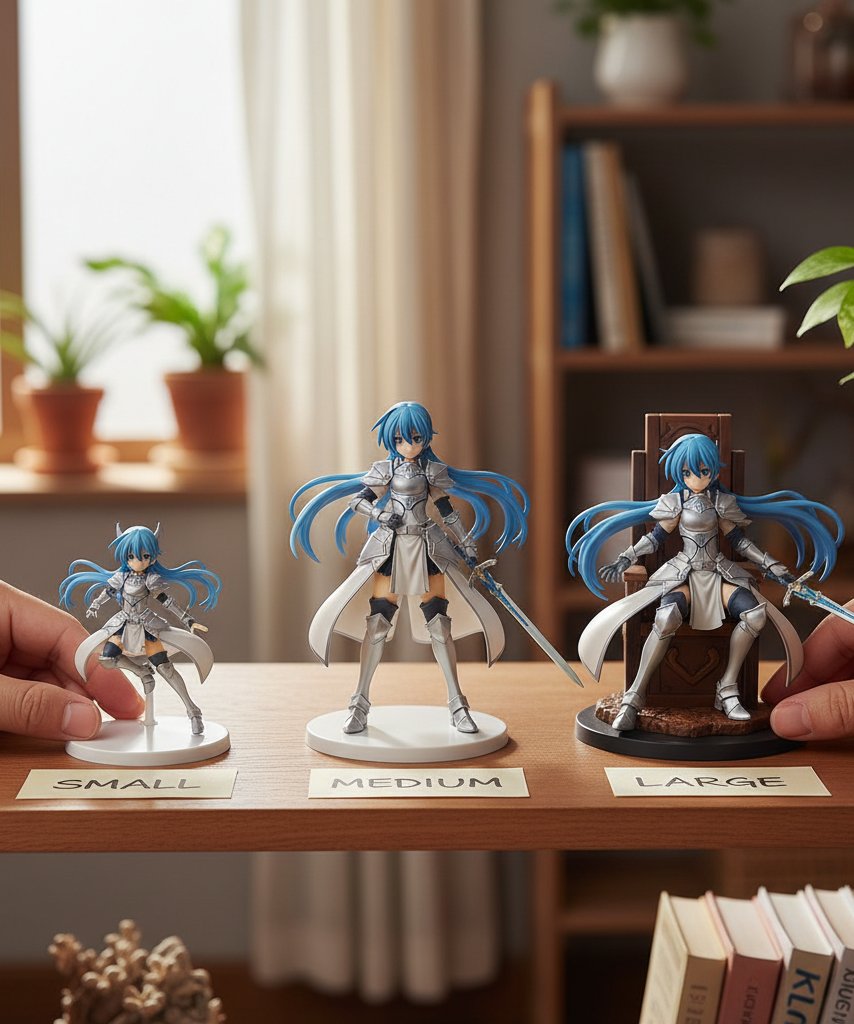
What Figure Scale Actually Means
Figure scale describes how much smaller the figure is than the character’s supposed full-size height. In simple terms, 1/7 scale means the figure is about one-seventh of the character’s imagined real height. A 1/8 scale figure is one-eighth. A 1/6 scale figure is one-sixth.
That still sounds abstract until you connect it to real display outcomes. The larger the second number, the smaller the figure tends to be. So in practice:
- 1/8 is usually smaller than 1/7
- 1/7 is usually smaller than 1/6
- 1/6 is usually the biggest of those three common collector scales
This is why people searching “what does 1/7 scale mean” are usually not asking for math. They want to know whether the figure will feel compact, balanced, or huge once it arrives.
Why Scale Is Only an Estimate, Not a Perfect Size Guarantee
Scale tells you the ratio, but not the whole story. Two figures with the same scale can still look noticeably different in person because character height, hair volume, pose, heels, props, wings, and base design all change the final footprint.
For example, a 1/7 scale standing character with a simple base may be much easier to display than another 1/7 scale figure with flowing hair, a jumping pose, and effect parts that spread outward. That is why scale should be treated as your first filter, not your only measurement.
A smart buyer checks three things together:
- listed scale
- actual figure height in inches or centimeters
- base width or pose spread when available
If one of those is missing, your risk goes up.
Common Anime Figure Scales Collectors See Most Often
When people talk about anime figure scale comparison, they usually mean the scales that show up most often in standard collectible figure listings. Among those, 1/8, 1/7, and 1/6 matter the most because they map cleanly to different collecting styles.
1/8 Scale: The Controlled, Shelf-Friendly Starting Point
A 1/8 scale figure is often the easiest place to start if you want something that feels premium without becoming a space problem immediately. For many characters, 1/8 scale lands roughly around 8 to 10 inches tall, though exact height varies by design and pose.
What 1/8 often means in practice:
- easier to fit on standard shelves and bookcases
- lower visual dominance in mixed displays
- often lighter and less intimidating to move
- usually a safer range for buyers watching both price and space
That does not make 1/8 automatically cheap or low-end. It just tends to feel more manageable. If you want a collection that stays neat and flexible, 1/8 is often a very comfortable baseline.
1/7 Scale: The Modern Sweet Spot for Presence and Practicality
If there is one size range that many collectors mentally treat as the default premium standard, it is 1/7. A lot of buyers end up here because 1/7 scale often gives a stronger display presence than 1/8 without becoming as demanding as 1/6. For many figures, that means a rough height zone around 9 to 11 inches, again depending on character and pose.
Why 1/7 scale is so popular:
- strong shelf presence without looking oversized in most rooms
- enough size for more visible sculpt detail and paint work
- still realistic for many glass cabinets and deeper wall shelves
- often the easiest compromise between impact and practicality
For a lot of collectors, 1/7 is the answer when they want the figure to feel substantial but not dominant.
1/6 Scale: Bigger Impact, Bigger Commitment
A 1/6 scale figure is where size becomes part of the purchase decision in a much more serious way. Depending on the character, you may be looking at something around 10 to 13 inches or more before counting dramatic bases, vertical hair, weapons, or seated-versus-standing differences.
That extra size changes everything:
- the figure can command attention instantly
- the shelf depth and height matter much more
- the total weight and handling stress can increase
- storage and future rearranging become less casual
A 1/6 scale purchase can be worth it if you want centerpiece energy. It is just not the kind of size you should buy casually because a product photo looked impressive.
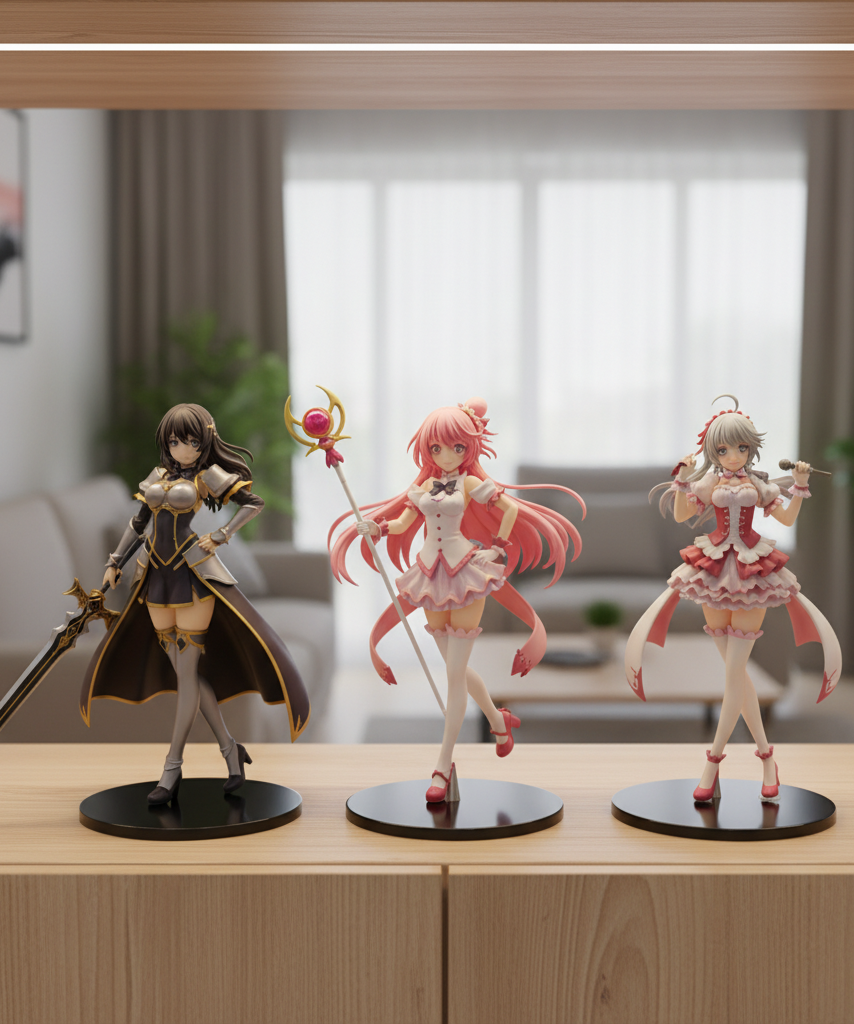
Anime Figure Scale Sizes: A Practical Comparison Table
Collectors often want a quick mental chart, so here is the useful version: not exact, but close enough to help you avoid obvious mistakes.
Typical Height Expectations
- 1/8 scale: often around 8 to 10 inches
- 1/7 scale: often around 9 to 11 inches
- 1/6 scale: often around 10 to 13 inches or more
These ranges overlap because scale is tied to character height. A short character at 1/6 can still end up near a tall character at 1/7. The label gives you direction, not certainty.
The Real Display Difference Is Not Just Height
The bigger issue is footprint. Many buyers think vertically first, but shelf planning is usually ruined by width and depth.
A figure can technically fit under your shelf clearance and still be annoying because:
- the base is wider than expected
- hair or clothing spreads outward
- weapons or effect parts project forward
- the pose needs empty air around it to look good
That is why anime figure scale sizes should always be interpreted as “How much room will this piece really claim?” rather than “How tall is it?”
How Scale Affects Shelf Space and Display Presence
Scale changes how a figure feels in a room, not just how it measures on paper. This is one of the biggest reasons collectors regret purchases: they understand the number but underestimate the presence.
Small Differences on Paper Can Look Much Bigger on a Shelf
The visual jump from 1/8 to 1/7 does not sound dramatic until the figure is standing next to your existing collection. Suddenly one piece looks fuller, taller, wider, and more premium. Then the jump from 1/7 to 1/6 can feel even more dramatic because the base and surrounding air space tend to increase too.
In practical display terms:
- 1/8 scale often blends more easily into compact or multi-figure setups
- 1/7 scale tends to become the visual center without overwhelming the shelf
- 1/6 scale often asks for breathing room and can make nearby pieces feel secondary
This is not a flaw. It is just the kind of effect you should buy on purpose.
Mixed-Scale Displays Need Intentional Planning
Collectors can mix scales successfully, but the result depends on layout. If you place a bulky 1/6 figure beside several modest 1/8 figures, the larger piece can make the rest of the shelf look accidental rather than curated.
Mixed displays work better when you:
- give the biggest figure its own zone
- group pieces with similar visual weight
- use risers or level changes for smaller figures
- avoid cramming large and small scales into the same shallow footprint
If you like a balanced, organized display, 1/7 is often the easiest anchor scale to build around.
Scale Also Changes the Emotional Feel of a Purchase
A 1/8 scale figure can feel like a smart addition. A 1/7 scale figure often feels like a statement. A 1/6 scale figure feels closer to a commitment. That emotional shift matters because it affects how selective you become, how often you buy, and how your collection evolves.
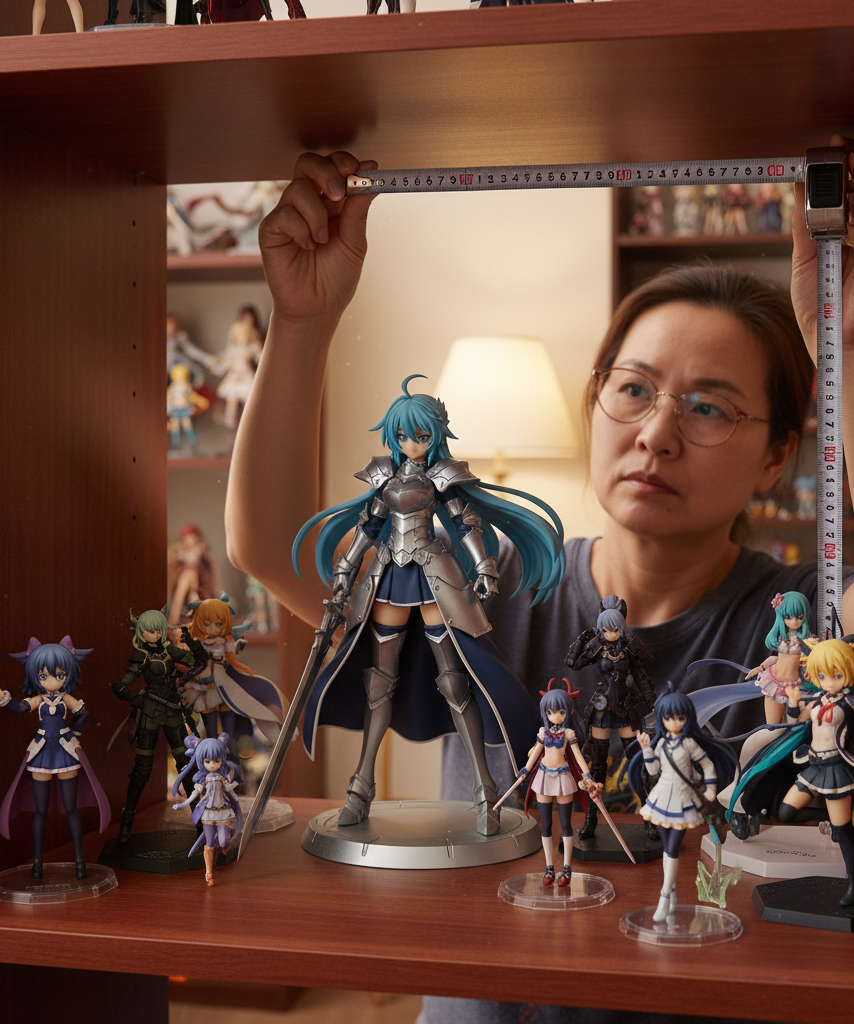
How Scale Changes Price, Weight, and Collecting Expectations
The bigger the figure, the more likely price goes up, but size is not the only reason. Larger scales usually create room for more detailed sculpting, more complex paint application, bigger bases, and more physically demanding packaging. All of that tends to push cost upward.
Why 1/6 Usually Costs More Than 1/7, and 1/7 More Than 1/8
As a broad buying rule:
- 1/8 often feels like the more budget-controlled premium option
- 1/7 often sits in the middle where value and impact meet
- 1/6 often enters a more serious collector budget range
That does not mean every 1/8 is cheap or every 1/6 is expensive. Brand, licensing, rarity, accessories, and sculpt complexity still matter. But if you are comparing similar figure types, larger scale usually means higher cost.
Bigger Scale Often Means More Long-Term Friction Too
Collectors sometimes budget for the purchase price and forget the rest:
- stronger shelves or safer cabinet spacing
- more careful dust management
- harder repacking if you rotate displays
- bulkier boxes for storage
- less freedom to buy casually without crowding the room
This is where a figure scale guide becomes useful beyond shopping. It helps you predict what kind of collector life a figure is asking for.
The Best Scale Depends on Your Real Goal
If your goal is efficient collecting with flexible display options, 1/8 is often the most forgiving. If you want a premium look without turning every purchase into a space negotiation, 1/7 is usually the strongest all-around choice. If you want high visual impact and are ready to support it with real display space and budget, 1/6 can be worth the jump.
A Simple Buying Framework Before You Choose 1/7, 1/8, or 1/6
Before you buy, ask yourself:
Do I know the listed height, not just the scale label?
Do I have shelf depth for the base and pose, not only the figure body?
Am I okay with this figure becoming a background piece, a balanced main piece, or a full centerpiece?
Does the price still make sense once I account for display space and future collecting limits?
Will this scale still fit the kind of collection I want six months from now?
Those questions prevent a lot of the usual scale-related regret.
Final Answer: What 1/7, 1/8, and 1/6 Really Mean
In plain collector terms, 1/8 usually means the most manageable balance of size and flexibility, 1/7 usually means the best middle ground for display presence and practicality, and 1/6 usually means stronger visual impact with a much bigger demand on space and budget. That is the real meaning behind the fractions.
If you want the short version of this anime figure scale guide, use scale as a buying forecast. It tells you how big the figure may feel, how expensive it may become, and how much room you will need to give it. The math matters a little. The shelf consequences matter much more.


B-Style Figures vs Standard Scale Figures: Which Fits Your Budget, Space, and Display Goals? – VaultFigure
[…] you are still sorting out how scale affects planning overall, our anime figure scale guide helps explain how common figure sizes translate into real shelf […]