Best Display Cases for Anime Figures: How to Choose for Dust, Space, and Style
If you are shopping for the best display cases for anime figures, you are usually trying to solve three problems at once: keep dust off the collection, fit the case into a real room, and make the figures look better instead of boxed in. That is why the right case is rarely just the biggest one or the cheapest one. The best choice depends on how large your figures are, how often you rearrange them, how visible you want the collection to be, and how much cleaning you are willing to do.
A good display case for anime figures should protect the sculpt, preserve the presentation, and make everyday collecting easier. Some collectors need a near-dust-sealed setup for scale figures. Others just need a tidy acrylic cabinet that fits a bedroom or apartment corner without dominating the whole space. The trick is understanding which tradeoffs matter before you buy.
Open Shelf vs Enclosed Case
Open shelving is cheaper, easier to access, and often looks lighter in a room. It works well if you rotate figures often, enjoy changing layouts, or mainly display a small number of pieces with enough breathing room. The downside is obvious: dust settles fast, especially on hair strands, textured bases, dark outfits, and effect parts.
An enclosed display case for anime figures solves most of that maintenance burden. Doors and side panels reduce how much dust reaches the figures, and they also create a more intentional “finished” look. For premium scale figures, resin statues, or pieces with delicate paint details, enclosed cases are usually the better long-term answer.
The tradeoff is access. Enclosed cases cost more, weigh more, and make every layout change slightly slower. If you constantly take figures out for photography, box checks, or shelf redesigns, a fully enclosed setup can feel less convenient.
Choose Open Shelves If
- you rotate figures frequently
- you want the lowest cost per display slot
- your collection is still small or temporary
- you do not mind regular dusting
- your room already feels tight and visually busy
Choose Enclosed Cases If
- you want better dust protection with less ongoing cleaning
- you collect expensive scale figures or resin statues
- you want a cleaner, more premium display look
- you have pets, carpet, or an apartment that gathers dust quickly
- you prefer long-term display stability over constant rearranging
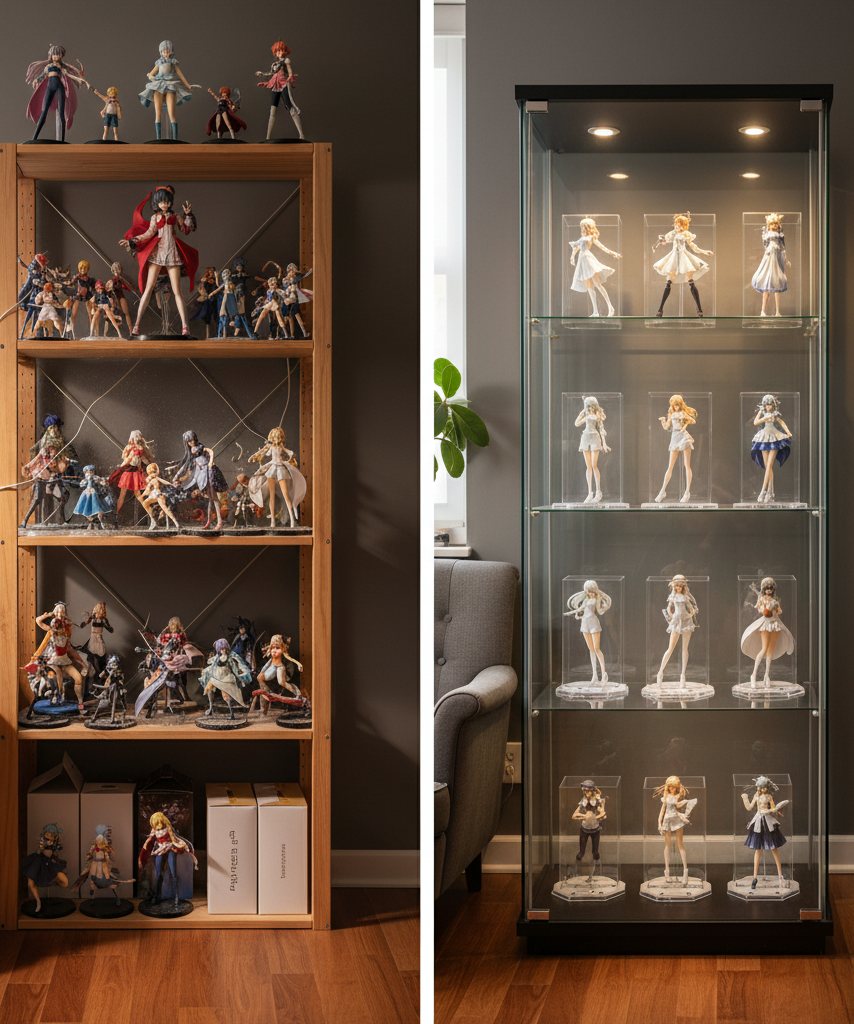
Dust Protection and Cleaning Tradeoffs
Dust is one of the biggest reasons collectors upgrade from basic shelving to enclosed cabinets. A closed case does not create a perfect sterile seal, but it dramatically slows how often you need to clean faces, hair tips, bases, and accessories.
That matters because anime figures are annoying to deep-clean once dust gets into sculpt details. Fine strands, layered costumes, translucent parts, and matte paint finishes can all look dull faster than collectors expect. With open shelves, a display may look great for the first week and noticeably tired a month later.
What Dust Protection Really Changes
A better case changes the maintenance schedule more than anything else. Instead of light dusting every week or two, many collectors can stretch cleaning much longer depending on room airflow, fabric, pets, and traffic.
Collectors comparing display cases for anime figures should think in maintenance terms:
- open shelf: easiest access, highest dust exposure
- partially enclosed cabinet: moderate protection, moderate convenience
- well-fitted enclosed case: best overall dust control for normal home use
Cleaning Convenience Still Matters
A case that is technically enclosed but awkward to open can become its own problem. Narrow doors, cramped shelves, or fixed-position dividers make it harder to clean around large bases and dynamic poses. In practice, the best case is not just the one that blocks dust. It is the one you can actually maintain without dreading it.
If you are already planning layouts to reduce visual crowding, it also helps to think about how a case supports spacing. Guides on <a href=”https://vaultfigure.com/how-to-display-anime-figures-without-making-your-shelf-look-cluttered/”>displaying anime figures without making your shelf look cluttered</a> pair naturally with enclosed cases because cleaner spacing makes both dusting and presentation easier.
Small Room and Apartment-Friendly Options
A lot of collectors do not need a huge museum-style cabinet. They need something that fits beside a desk, against a bedroom wall, or in a narrow apartment corner without making the room feel swallowed.
For small spaces, footprint and visual weight matter almost as much as raw capacity. Tall, narrow cases often work better than wide low units because they use vertical wall space instead of eating the room’s traffic lanes.
What Works Well in Small Rooms
- tall narrow glass or acrylic cabinets
- stackable cube-style enclosures for compact collections
- countertop acrylic boxes for one to three premium pieces
- slim bookcase-format cabinets with clear front panels
- wall-adjacent cases that keep door swing practical
What Usually Works Poorly
- very deep cabinets in narrow rooms
- bulky dark cases that visually shrink the space
- oversized units bought “for future growth” before the current collection needs them
- low wide cases that compete with desks, drawers, or media furniture
When apartment space is limited, a smaller enclosed case often beats a large open shelf. Even if total capacity is lower, the collection usually looks cleaner and needs less upkeep.
Glass vs Acrylic Case Considerations
Most buyers end up comparing glass and acrylic because both can look clean and collector-friendly, but they behave differently in daily use.
Glass Display Cases
Glass usually looks more premium. It resists scratching better than acrylic, stays clear longer, and gives the display a more furniture-like presence. For living rooms, dedicated collection corners, or serious scale-figure displays, glass often wins on presentation.
Glass also has drawbacks:
- it is heavier and harder to move
- assembly is more demanding
- breakage risk is higher during transport or rough handling
- some units feel less forgiving in homes with children or crowded walkways
Acrylic Display Cases
Acrylic is lighter, easier to move, and often better for collectors who want modular flexibility. It is especially useful for desktop displays, single-character showcases, top-of-dresser setups, or apartments where a heavy glass cabinet would be annoying to relocate.
Acrylic is not automatically cheap-looking, but lower-quality acrylic can scratch, haze, or flex more than collectors want. Better acrylic cases work best when the use case is compact, practical, and easy to access rather than large and furniture-like.
Which Material Is Better?
If your goal is the most polished living-space display, glass usually wins. If your goal is easier setup, lighter weight, and flexible placement, acrylic can be the smarter buy.
A simple rule:
- choose glass for long-term room display and premium presentation
- choose acrylic for lighter setups, smaller footprints, and easier movement
Best Case Types by Figure Scale and Collection Size
The best display case for anime figures depends heavily on what you actually collect. A case that works for Nendoroids may be inefficient for 1/4 bunnies, and a cabinet that flatters three premium scales may look wasteful if most of your collection is prize figures.
Nendoroids, Trading Figures, and Small Prize Figures
Best case types:
- tiered acrylic cases
- cube cabinets with risers
- shallow modular display boxes
These collections benefit from visibility and layering more than raw shelf depth. Too much empty depth can actually make small figures disappear.
Standard Prize Figures and 1/8 Scale Figures
Best case types:
- medium-depth enclosed cabinets
- glass door bookcase-style cases
- acrylic-front cabinets with adjustable shelves
This is where flexibility matters most. Shelf spacing, not just overall size, often determines whether the case feels efficient.
1/7 Scale Figures and Dynamic Poses
Best case types:
- enclosed cabinets with generous width per shelf
- glass cases with adjustable shelf heights
- wider units that allow negative space around hair, weapons, and effect parts
For scale figures, case width and silhouette clearance matter more than buyers expect. If a figure technically fits but loses its shape because it is crowded, the case is too small in practice.
Large Centerpieces, 1/6 Figures, and 1/4 Bunnies
Best case types:
- tall glass cabinets with fewer figures per shelf
- deeper enclosures with careful vertical clearance
- dedicated single-piece or low-density display sections
Large figures punish bad planning quickly. They need height, width, and enough visual breathing room that the sculpt still reads clearly from outside the case.
Style Matters: The Case Should Match the Room
Collectors sometimes focus so hard on dimensions that they forget the case becomes part of the room. A display case for anime figures should make the collection look deliberate, not like temporary storage.
A few style rules usually help:
- use lighter frames in smaller or darker rooms
- keep cabinet finishes consistent with nearby furniture when possible
- avoid overly decorative case trim that competes with the figures
- use interior lighting carefully so the figures stay the focus
- leave some empty space inside the case so the room-facing presentation stays clean
The best-looking setups often feel restrained. The case supports the figures instead of trying to become the main attraction.
How to Choose the Right Display Case Before You Buy
Before buying, ask these five questions:
- How much dust protection do I actually want?
- What is the largest figure or widest silhouette I need to fit?
- Does my room have more available wall height or floor width?
- Will I rearrange often, or mostly leave the display alone?
- Do I want the case to disappear visually, or look like premium furniture?
Those answers usually point you toward the right format much faster than browsing random case photos.
Final Verdict
The best display cases for anime figures are the ones that balance dust control, room fit, and visual presentation for your actual collection size. Open shelves are fine for low-cost flexibility, but enclosed cases are usually better for collectors who want cleaner displays and less maintenance. Glass tends to win on premium appearance, while acrylic wins on lighter weight and modular convenience.
If you choose based on figure scale, room footprint, and how often you really want to clean, you will end up with a display case for anime figures that protects the collection and makes it look better every day, not just on the day it arrives.