Fake vs Real Anime Figures: 7 Signs a Figure Is a Bootleg
If you are staring at a listing or an unboxed figure and wondering whether it is genuine, you are not alone. Searches for fake vs real anime figures usually come from collectors who already feel that something is off: the price looks too good, the face sculpt feels wrong, or the box quality seems suspicious. The good news is that bootlegs often reveal themselves through a pattern of small warning signs rather than one single giveaway.
This guide breaks down 7 practical bootleg anime figure signs that collectors can use when checking product photos, store listings, and figures in hand. The goal is not to make you paranoid. It is to help you spot the differences between fake vs real anime figures faster, with less guesswork, and with a clearer sense of what actually matters.
Why Bootlegs Fool Buyers So Easily
Most bootleg anime figures are not marketed as obvious fakes. They are usually framed as discounted deals, vague imports, or “same factory” items with just enough ambiguity to confuse new buyers. Some counterfeit listings even reuse official promo photos, making the fake vs real anime figure question harder until the product actually arrives.
That is why it helps to judge a figure across several areas at once:
- listing quality
- seller behavior
- packaging details
- paint and finish consistency
- sculpt sharpness
- proportions and face accuracy
- overall material feel
The more red flags stack up, the more likely you are dealing with a bootleg rather than a real licensed release.
Sign 1: The Price Is Suspiciously Low for the Figure Type
A low price alone does not prove a figure is fake, but it is often the first warning sign. If a figure that normally sells at a premium price is suddenly listed for a fraction of that amount, you should stop assuming you found a hidden bargain.
Collectors should be especially careful when the listing combines:
- a dramatic discount with no explanation
- high-demand characters at unusually cheap prices
- vague wording like “anime model toy” instead of clear line and manufacturer details
- no mention of scale, brand, or release series
This matters even more when comparing fake nendoroid vs real listings. Authentic Nendoroids usually have recognizable maker information, more stable pricing, and clearer packaging references. A suspiciously cheap listing for a popular character often means corners were cut somewhere.
Sign 2: The Box, Logo, or Manufacturer Details Look Off
Packaging is one of the easiest places to catch a bootleg. Real licensed figures usually come with more consistent branding, cleaner print quality, and identifiable manufacturer information. Bootleg boxes often look almost right at first glance, which is exactly why you need to inspect the details.
Common packaging red flags include:
- blurry logo printing
- missing holographic or licensing marks where expected
- odd fonts or color shifts compared with known official packaging
- brand names written inconsistently
- low-resolution character art
- thin cardboard or weak inner blister support
Some figures do ship in simpler boxes than others, so packaging alone is not a final verdict. But when poor packaging appears together with weak sculpt quality, cheap pricing, and unreliable seller photos, the fake vs real anime figures question starts answering itself.
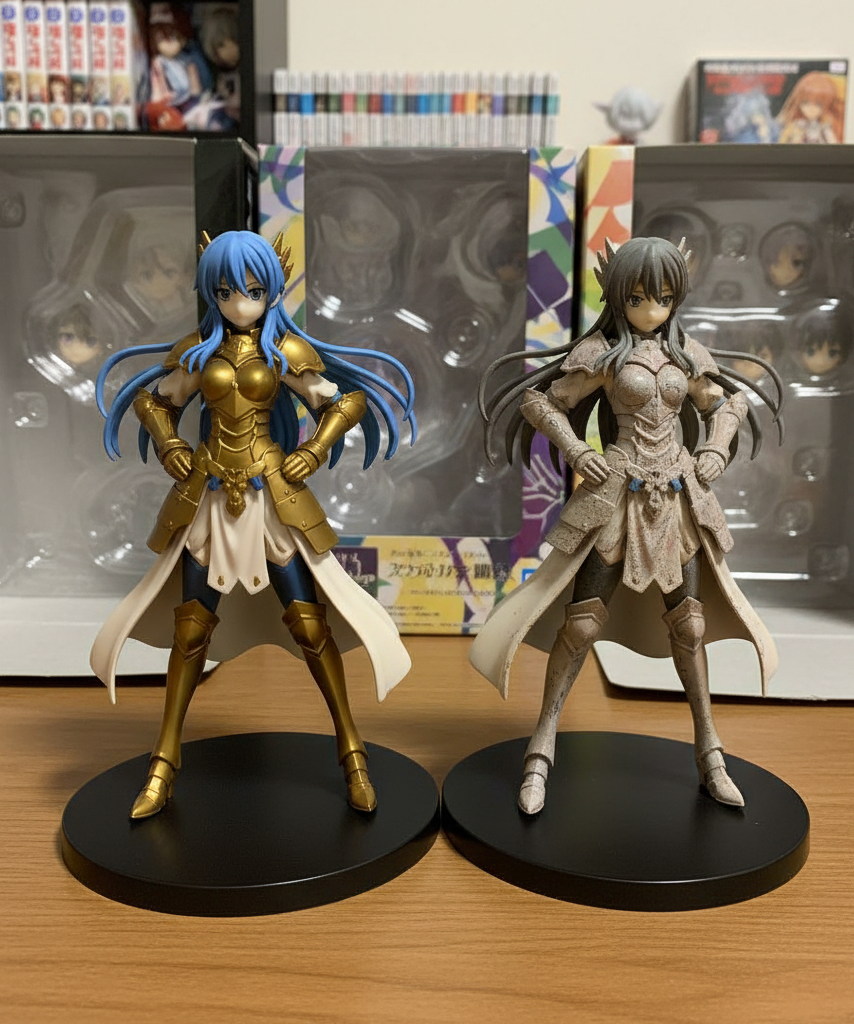
Sign 3: Paint Quality Looks Flat, Messy, or Inconsistent
One of the most common how to spot fake anime figures clues is paint quality. Bootlegs frequently struggle with clean paint separation, even on characters with simple color schemes.
Look closely for:
- paint bleeding across edges
- glossy skin where the original should be matte
- muddy eye printing
- uneven shading
- rough color transitions on hair and clothing
- random overspray on small details
Real figures are not perfect, especially in lower-cost prize tiers, but official releases usually show more control. Even when a licensed figure has minor flaws, the finish tends to look deliberate rather than sloppy.
Sign 4: The Face Sculpt and Expression Do Not Match Official Photos
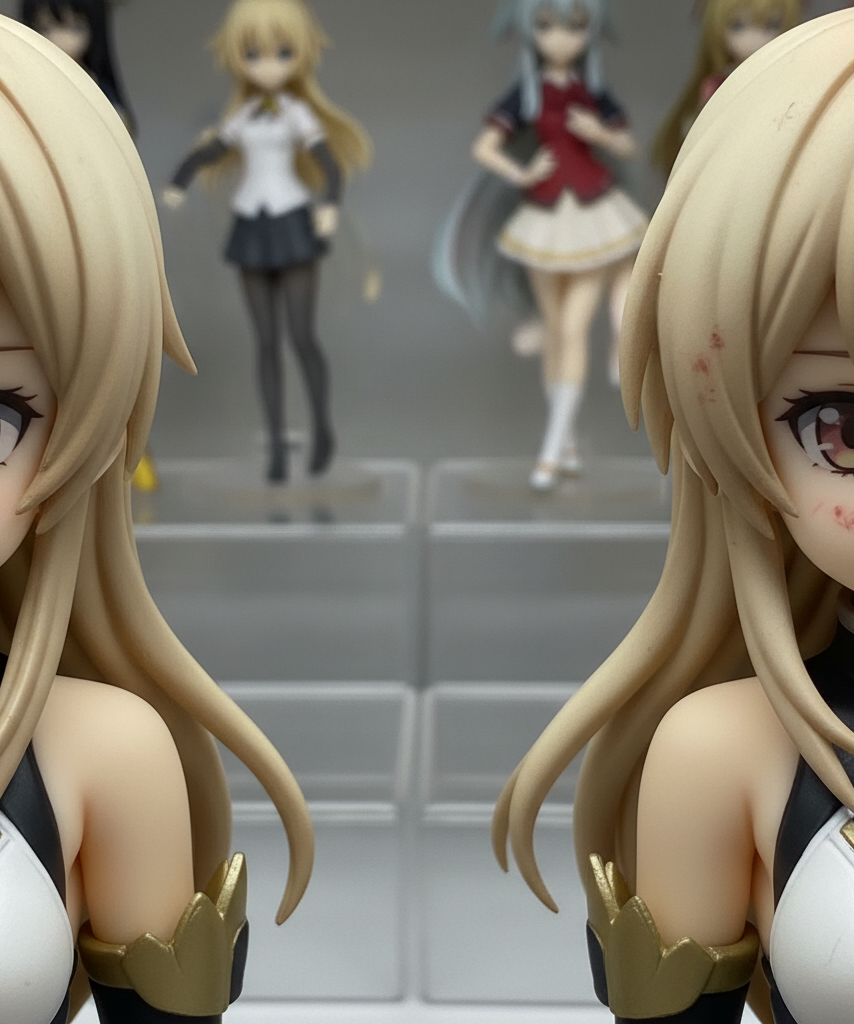
For many collectors, the face is the fastest fake detector. A real figure can vary slightly from promo photos, but the character should still feel like the same sculpt. Bootlegs often miss the expression entirely.
Watch for:
- eyes placed too high, too low, or slightly uneven
- pupils that make the character look cross-eyed or vacant
- a mouth shape that changes the expression too much
- cheeks, jawline, or chin sculpted too heavily
- softer facial details that make the figure look melted or inflated
This is especially important in fake vs real anime figure comparisons for character-driven lines where facial likeness is a big part of the appeal. If the emotional read of the character feels wrong immediately, trust that instinct and start checking the rest of the figure more critically.
Sign 5: Proportions, Pose, or Small Parts Feel Wrong
Bootlegs often lose precision in the sculpt itself. That can show up as awkward body proportions, poor balance, warped accessories, or details that look thicker and less refined than the official version.
Some common proportion and assembly issues are:
- hands that look oversized or poorly shaped
- hair strands fused together into thick clumps
- bent weapons or support parts
- pegs that fit badly or leave obvious gaps
- bases that feel too light, too thin, or incorrectly printed
- posture that leans differently from official photos
Real figures can still have production variance, but they usually preserve the intended silhouette. Bootleg anime figures often capture the broad pose while losing the crispness that makes the original sculpt work.
Sign 6: Listing Photos Look Recycled, Cropped, or Intentionally Vague
If you are trying to judge bootleg anime figure signs before buying, listing photos matter almost as much as the product itself. Suspicious sellers often rely on official promo images, low-resolution crops, or angles that hide the areas where fakes are easiest to spot.
Be cautious if a listing uses:
- only polished promotional photos and no real-item shots
- watermarked images from another shop
- close crops that hide the full base or box
- heavy filters or exaggerated color saturation
- inconsistent backgrounds suggesting photos were pulled from different sources
- titles stuffed with keywords but lacking basic product specifics
A trustworthy listing does not need to look fancy, but it should make verification easier instead of harder. The more a seller avoids showing the actual item, the less confidence you should have.
Sign 7: The Plastic, Weight, and Finish Feel Cheap in Hand
Once the figure arrives, the material feel can confirm what the listing already suggested. Bootlegs often use cheaper plastics, weaker assembly tolerances, and lower-fidelity finishes that are hard to hide in person.
Collectors frequently notice:
- a stronger chemical smell than expected
- unusually light or hollow-feeling parts
- oily or tacky surfaces
- unstable pegs and loose joints
- visible seam lines where they should be cleaner
- a base or support rod that feels flimsy
This does not mean every light figure is fake, but when the overall tactile impression feels cheap in multiple ways, it usually supports the other warning signs.
Quick Fake vs Real Anime Figures Checklist
If you want a fast decision filter, run through this checklist before buying or right after unboxing:
- Is the price unusually low for the character, scale, or line?
- Does the listing clearly identify the manufacturer and release details?
- Do the packaging print quality and logos look consistent?
- Are the face sculpt and paint details close to known official references?
- Do proportions, accessories, and pegs look properly finished?
- Are the seller photos trustworthy and specific to the actual item?
- Does the final material feel match a real collectible rather than a cheap toy?
If several answers point the wrong way at once, you are probably looking at a bootleg.
What to Do If You Think You Already Bought a Fake
If you suspect you already received a counterfeit figure, do not panic and do not throw away the packaging immediately. First, document what you have.
Take clear photos of:
- the front and back of the box
- any licensing marks or missing labels
- the face sculpt up close
- paint defects and assembly gaps
- the base, pegs, and support parts
Then compare the figure against official manufacturer photos or reputable collector references. If the purchase came through a marketplace, open a dispute while the return window is still active. The stronger your photo evidence, the easier it is to explain that the product does not match what was advertised.
If you want a safer next step after a bad marketplace experience, browsing a more stable anime figures collection is usually a better starting point than gambling on another vague listing.
Final Thoughts on Bootleg Anime Figure Signs
The difference between fake vs real anime figures usually comes down to consistency. Real licensed releases tend to align across price logic, packaging, sculpt accuracy, paint quality, and seller transparency. Bootlegs break that pattern. Maybe the box is wrong, the face looks off, the paint is messy, or the listing hides too much. Usually, it is not just one problem.
If you learn to spot these seven warning signs together, you can catch most suspicious figures before they waste your money or disappoint you on arrival. The smartest collectors are not the ones who never make mistakes. They are the ones who learn which details to trust, and which “deals” deserve a hard pass.