Anime Figure Deposit vs Full Payment: Which Pre-Order Option Is Safer?
If you are worried about cancellation rules, release delays, or whether a store will handle your order properly, an anime figure pre order deposit is usually the safer choice for most buyers. Full payment can be safer only when the retailer is highly trustworthy, the cancellation policy is clear, and you want to lock in the item and finish the transaction early.
Collectors often treat deposit and full-payment pre-orders as if they are simply two checkout styles, but they create very different risk profiles. Your cash flow, refund exposure, flexibility, and missed-payment risk all change depending on which option you choose.
Quick Comparison: Deposit vs Full Payment for Anime Figure Pre-Orders
| Decision factor | Deposit pre-order | Full payment pre-order |
|---|---|---|
| Upfront cost | Lower | Higher |
| Cash flow impact | Easier to manage | Heavier early commitment |
| Cancellation flexibility | Usually better, but policy-dependent | Usually worse once fully charged |
| Refund exposure | Lower total amount at risk | Higher total amount at risk |
| Missed-payment risk later | Yes, if balance deadlines are strict | No later balance payment to remember |
| Good fit for | Cautious buyers, long release windows, uncertain schedules | Confident buyers, trusted stores, simpler one-step checkout |
The safest option is not always the cheapest or most convenient one. It is the one that matches the store’s policy, your budget stability, and how much trust you have in that retailer.
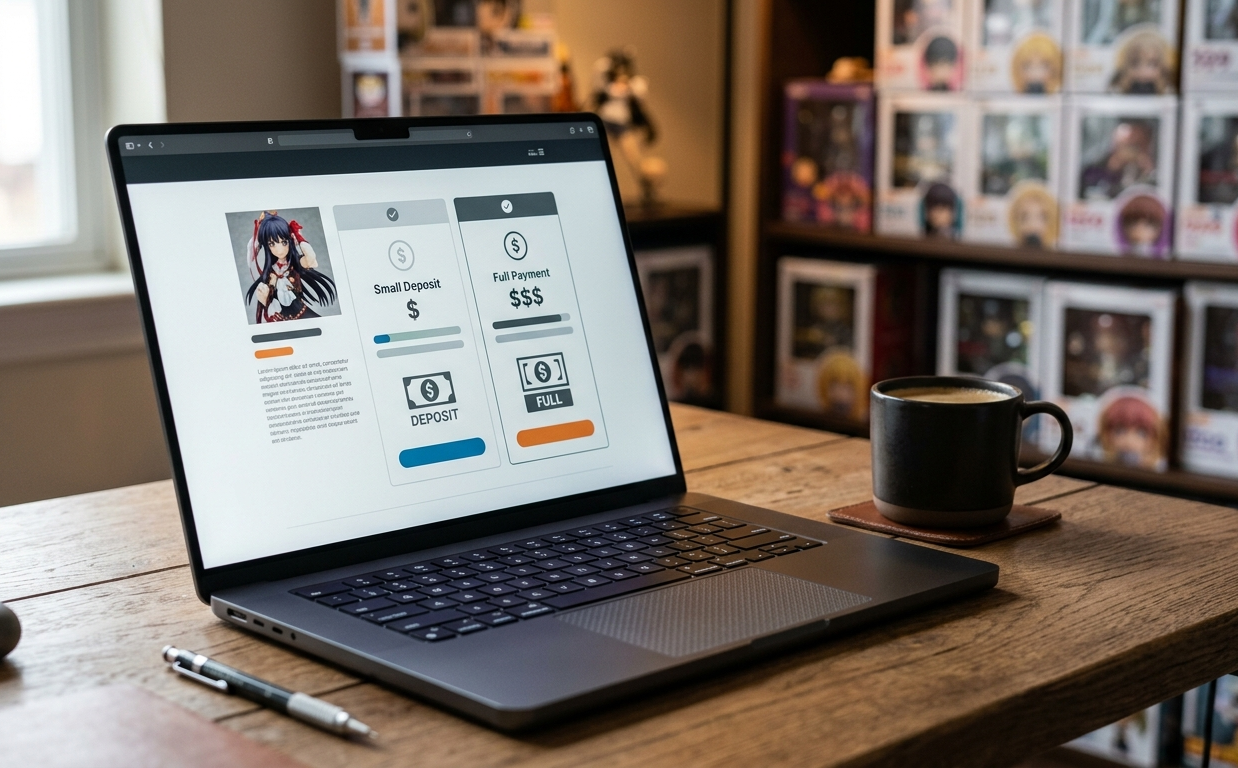
How Deposit and Full-Payment Pre-Orders Usually Work
How a deposit pre-order works
With a deposit model, you pay a smaller amount upfront to reserve the figure. When the item is ready to ship, or close to release, the store charges the remaining balance. Some stores send an invoice later, while others expect you to return and complete payment within a fixed deadline.
This structure lowers the amount of money tied up today, which is why many collectors prefer it for expensive scales, delayed releases, or multi-month shopping plans. It also means the second payment becomes a real obligation you cannot ignore.
How a full payment pre-order works
With full payment, the retailer collects the entire price at checkout. In exchange, your order is financially complete from day one, aside from possible shipping adjustments or tax differences depending on the store.
For buyers who hate follow-up invoices or worry they might miss a balance reminder, this can feel cleaner. The tradeoff is obvious: more money is exposed earlier, and getting it back can be harder if the retailer policy is strict or service quality drops before release.
Pros and Cons of Each Payment Structure
Deposit pre-order pros
- Lower upfront cost makes expensive figures easier to reserve.
- Less total money is exposed if the retailer becomes difficult to work with.
- Usually gives more flexibility when your budget may change before release.
- Works well when release windows are long and uncertain.
Deposit pre-order cons
- You still need funds ready later for the balance payment.
- Missing the final payment deadline can lead to cancellation, fees, or loss of the deposit.
- Some stores make deposits non-refundable even when the balance is still unpaid.
- The lower first payment can tempt buyers to overcommit across too many pre-orders.
Full payment pre-order pros
- No second invoice to track later.
- You remove the risk of forgetting a balance deadline.
- It can be simpler for strict budgeting if you prefer to settle purchases immediately.
- In some cases, it may reduce the chance of price changes before release.
Full payment pre-order cons
- More money is locked up for months.
- If the retailer policy is poor, your refund exposure is much larger.
- Release delays become more annoying because the full amount is already gone.
- It is harder to pivot if your priorities change before launch.
When Deposit Is Safer
For most collectors, deposit is the safer answer when uncertainty is high.
1. The release date is far away or likely to move
Anime figure release schedules slip all the time, especially for imported items, premium scales, and licensed products with long production timelines. When the release window is several months away, a deposit limits how much cash is frozen while you wait.
That matters because release delay risk is not just about patience. It is also about budget pressure. A figure that ships much later than expected may collide with other releases, bills, or personal spending priorities.
2. You are still testing store trust
If you have never ordered from a retailer before, paying only a deposit can be a sensible risk-reduction move. It gives you room to evaluate how the store handles communication, policy clarity, balance reminders, and customer support before the full amount is on the line.
This is especially relevant when the store looks legitimate but still has limited long-term trust signals in your own buying history.
3. You want cancellation flexibility
Not every buyer is completely certain at checkout. Sometimes the goal is to hold a reservation while you keep comparing prices, manufacturer updates, paint samples, or shelf-space plans.
A deposit structure is often better for that hesitation phase. It does not guarantee easy cancellation, but it usually creates a softer exit than trying to unwind a full-payment pre-order later.
4. You are managing multiple pre-orders
Collectors who pre-order several figures across different months face a real cash-flow problem. Deposit orders spread the financial load across time. That does not eliminate risk, but it reduces the chance of one early checkout draining budget you may need elsewhere.
When Full Payment Is Safer
Full payment is not automatically the riskier option. It becomes safer in specific conditions.
1. The retailer has strong trust and clear policies
If the store has a solid reputation, responsive support, and a clearly written preorder cancellation policy, full payment can be safer from an administrative point of view. You pay once, receive one confirmation, and avoid later invoice issues.
In that situation, the main risk is less about the payment structure and more about the reliability of the retailer itself.
2. You know you are likely to miss balance deadlines
Some buyers are honest about this: if there is a second invoice six months later, there is a real chance it will be buried in email. If the store is strict about unpaid balances, a deposit order may create its own preventable risk.
For those buyers, full payment can be safer because it removes the chance of losing the order due to inattention.
3. Your budget is stable and the item is a definite buy
If the figure is already fully decided, the shop is trusted, and the payment will not stress your budget, paying in full can simplify the whole process. There is no later decision point, no extra reminder, and no second checkout step.
4. You want fewer moving parts in the transaction
Some collectors value operational simplicity over optional flexibility. If you prefer fewer future tasks and less order maintenance, full payment reduces the chances of a technical or human error during the final collection stage.
The Real Risk Factors Buyers Should Check Before Choosing
Payment structure matters, but store policy matters more.
Before choosing anime figure deposit vs full payment, check these points carefully:
Cancellation policy
Look for answers to these questions:
- Is the deposit refundable, partially refundable, or fully non-refundable?
- If you paid in full, can you still cancel before release?
- Are there admin fees or store-credit-only refunds?
- Does the policy treat preorder cancellation differently from in-stock items?
Release-delay handling
A delayed release does not always justify cancellation. Some stores state that delays are normal and do not qualify for refunds. If you choose full payment, that clause matters even more because the entire amount may stay tied up for much longer than expected.
Balance payment deadline
For deposit orders, check exactly how long you have to pay the remainder. A store with a very short invoice window increases missed-payment risk.
Communication quality
A good retailer policy is not enough if reminders never arrive clearly. Stores that send proper balance notices, order updates, and release-delay explanations are much safer to use with deposit structures.
Payment method protection
If possible, use a payment method with meaningful buyer protection. That does not replace reading the retailer policy, but it does give you another layer of protection if something goes wrong.
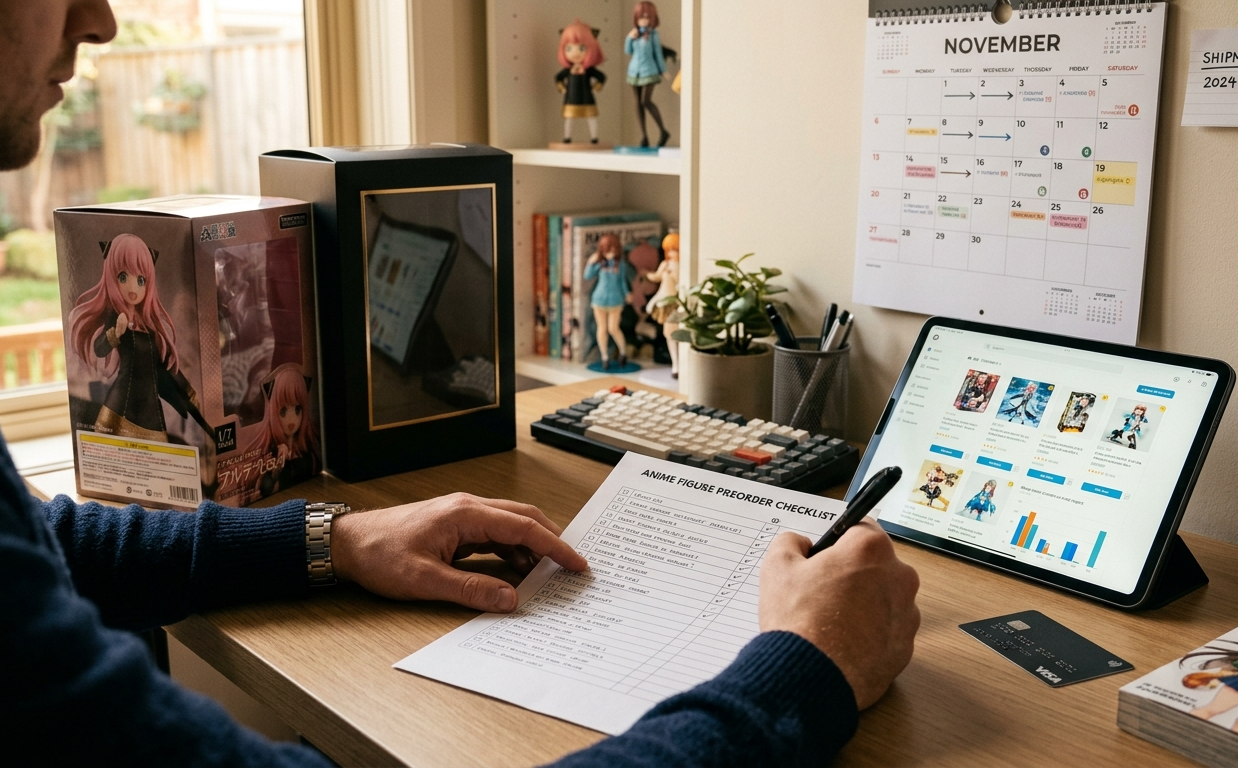
Checklist Before Choosing a Payment Option
Use this quick checklist before checkout:
- Choose deposit if the release is far away, the shop is new to you, or you want lower upfront exposure.
- Choose full payment if the store is highly trusted and you do not want a future balance invoice.
- Avoid full payment if the cancellation policy is vague or hard to find.
- Avoid deposit if you regularly miss follow-up emails or billing reminders.
- Review whether the deposit is refundable, non-refundable, or only transferable to store credit.
- Check whether release delays change your cancellation rights.
- Make sure the final balance month will still fit your budget.
Which Pre-Order Option Is Safer for Most Buyers?
For most shoppers asking about preorder payment risk, deposit is the safer default because it limits upfront exposure while preserving more flexibility. That is especially true when the store is unfamiliar, the release window is long, or your budget may change before launch.
Full payment is safer only when three conditions are already true:
- you trust the retailer,
- the cancellation policy is clear,
- and you prefer administrative simplicity over flexibility.
If any of those conditions are weak, deposit usually gives you the better safety margin.
Final Takeaway
When comparing anime figure deposit vs full payment, the safer option is the one that reduces the kind of mistake you are most likely to make. If your biggest worry is refund exposure, cancellation uncertainty, or release delay stress, pick deposit. If your biggest worry is forgetting a balance invoice from a store you already trust, full payment can be the cleaner choice.
The smart move is not choosing one method blindly. It is matching the payment structure to the retailer policy and to your own buying habits.