Anime Figure Re-Release vs First Release: Which One Should Collectors Buy?
If you are choosing between a first release and an anime figure re-release, the better buy usually depends on your goal: first releases tend to matter more for rarity-focused collectors, while a rerelease is usually the smarter buy for display-first buyers who want the same character presence at a lower risk and lower price.
Collectors often talk about “first release” copies as if they are automatically better, but that is too simple. In practice, the right choice comes down to five things: how much you care about aftermarket upside, whether the version includes any exclusive bonus parts, how sensitive you are to paint or manufacturing variation, whether box condition matters to you, and how urgently you want the figure now instead of later.
Quick Comparison: Re-Release vs First Release
| Buying priority | First release usually wins | Re-release usually wins |
|---|---|---|
| Lowest purchase price | Yes | |
| Faster access before aftermarket spikes | Yes, if you pre-ordered early | |
| Collector prestige and originality | Yes | |
| Best value for display collectors | Yes | |
| Highest chance of bonus part inclusion | Sometimes | Sometimes not |
| Stronger rarity profile | Yes | |
| Lower fear of overpaying aftermarket | Yes |
For most collectors, an anime figure re release vs first release decision is really a choice between collector premium and practical value. If you care mainly about owning and displaying the sculpt, a re-release often wins. If you care about owning the earliest version, protecting long-term collector value, or securing an edition with first-run extras, the first release can still justify the premium.
What a Re-Release Usually Changes and What Stays the Same
A good anime figure rerelease is normally built from the same base sculpt, character concept, scale, and overall display intent as the original. In many cases, the manufacturer is trying to satisfy renewed demand, not reinvent the product. That means the core experience usually stays familiar: same pose, same character, and broadly the same shelf presence.
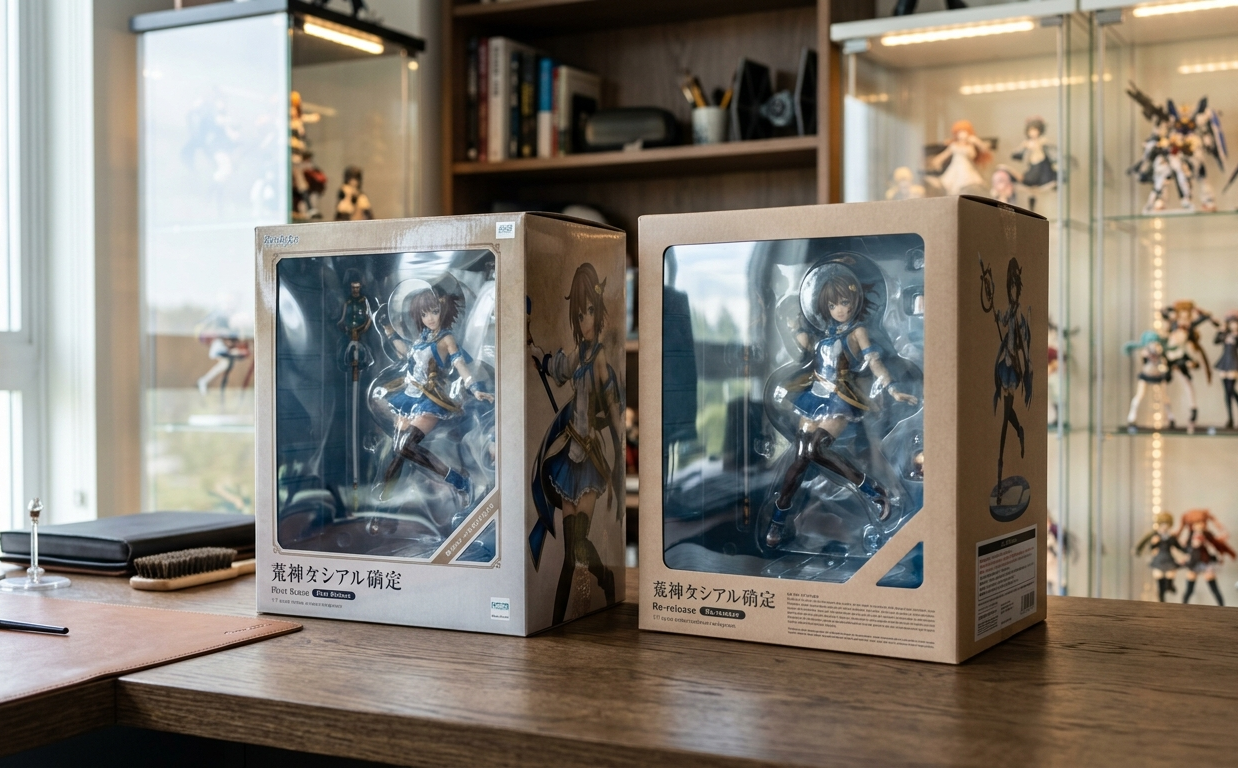
What can change is the part collectors tend to underestimate: production context. A first release is manufactured during the original launch window, while a reissued anime figure is produced later under a different batch schedule. Even when the official product page looks nearly identical, some of the following can vary:
- outer box print details or release stickers
- tray design and internal packaging layout
- paint saturation or finish consistency between batches
- minor factory cleanup quality, especially around seams or shading
- availability of store-specific or event-specific bonus parts
- copyright year or product code markings on packaging
Those differences are not always dramatic, and many re-releases are excellent. But serious collectors should stop assuming “same promo photos” means “identical in every small detail.” Batch variation exists in both directions. Sometimes the re-release is a touch cleaner thanks to factory refinements. Sometimes the first release has the finish collectors prefer.
Box Differences Matter More to Some Buyers Than Others
Box value is one of the biggest dividing lines between collecting styles. If you are a display-first buyer who plans to keep the figure out of the box long-term, small packaging changes may not matter much. If you are a mint-box collector, reseller, or someone who wants the most “original run” version possible, the box can matter a lot.
Collectors often pay attention to:
- first-run print details
- special edition stickers
- included paper inserts
- store exclusivity labels
- any packaging cues that distinguish the earliest batch from the rerelease
That does not mean the first-release box is automatically better. It means it is usually more important to a narrower kind of buyer.
Bonus Parts Can Change the Entire Value Equation
If the original launch included a preorder face plate, postcard, acrylic bonus, alternate arm, or store-exclusive extra, that piece can make the first release meaningfully more attractive. Some re-releases keep the bonus. Many do not. That single difference can explain why one version holds a stronger aftermarket even when the main figure body looks the same.
Before buying, check whether the exact listing includes:
- bonus faces or hands
- alternate display accessories
- manufacturer campaign extras
- shop-exclusive items from retailers like AmiAmi, Good Smile, or native storefront campaigns
A collector who wants the “complete package” may be disappointed by a cheaper re-release if a missing extra was the whole reason the original was special.
Price and Aftermarket Differences
Price is where a re-release usually makes the strongest argument. In the anime figure aftermarket, scarcity pushes prices up fast. Once a popular figure sells out and stays unavailable, collectors who missed preorder season may have to choose between paying inflated resale pricing or waiting to see whether a reissue happens.
When a re-release is announced, it often resets the market. Not always completely, but enough to matter. A figure that was selling at an uncomfortable premium can suddenly become accessible again. That is why budget-conscious collectors often prefer patience over panic buying.
How First Releases Hold Collector Value
First releases tend to hold value better when at least one of these is true:
- the figure had a short or highly sought-after original run
- the manufacturer rarely does reissues
- the first run includes bonus content the later run lacks
- collectors strongly prefer original packaging details
- franchise hype peaked during the first release period and created nostalgia around that batch
In those cases, the anime figure first release can carry a premium that is not just emotional. It can reflect real collector demand tied to rarity and completeness.
Why Re-Releases Often Offer Better Buying Efficiency
A re-release usually lowers the penalty for simply wanting the figure on your shelf. Instead of paying aftermarket prices for the exact same sculpt, you may get nearly the same visual result for a much fairer number. That makes a rerelease especially attractive if your priorities are:
- display value per dollar
- avoiding speculator pricing
- building a collection across many characters instead of overcommitting to one piece
- upgrading from prize figures to scales without overspending
The practical question is not “Which version is more prestigious?” but “Which version gives me the result I actually care about?” For many shelves, the answer is the re-release.
When First Releases Matter More to Collectors
A first release makes more sense when you collect with a scarcity mindset rather than a pure display mindset. That does not mean you are flipping figures. It means you care about originality, complete inclusions, and the confidence of owning the earliest market version.
Choose the First Release If You Prioritize Originality
You should lean toward a first release when:
- you specifically want the original batch
- you keep boxes and care about first-print packaging
- you value “complete with all bonuses” as part of the collectible itself
- you collect lines where early-run differences are documented and discussed by the community
- you are comfortable paying a premium for collector satisfaction, not just function
This is especially true for niche or older figures where the first-run identity is part of the story. In those cases, the figure is not just an object to display. It is a piece of release history.
First Releases Can Make Sense for Hard-to-Reissue Characters
Some characters, licenses, or manufacturers do not come back often. If you know a figure belongs to a line that almost never gets reissued, waiting for a re-release can be wishful thinking. In that case, locking in the first release at retail can be smarter than gambling on a future second chance.
That is not a reason to overpay recklessly in the aftermarket, though. It is a reason to distinguish between “genuinely hard to get later” and “probably getting a reissue after renewed franchise buzz.”
When a Re-Release Is the Smarter Buy
For most active buyers, especially those still growing a collection, the smarter buy is often the re-release. It removes urgency, lowers entry cost, and keeps your budget flexible for more figures, better displays, or higher-priority grails.
Choose the Re-Release If You Care More About Display Than Batch Prestige
A reissued anime figure is usually the better move when:
- you mainly care about the sculpt, pose, and shelf impact
- the rerelease includes the same essential parts
- aftermarket pricing on the first release has become unreasonable
- you are not trying to maximize rarity
- you would rather buy two strong figures than overspend on one original batch copy
This is the point many newer collectors need to hear clearly: you do not lose collector credibility by buying the rerelease. If the figure looks excellent, fits your collection, and saves you money, that is a smart collector decision.
Re-Releases Are Also Good Risk Control
The anime figure aftermarket can reward patience. A re-release can reduce the chance that you buy into hype at the top of the price curve. It can also protect you from paying a premium for a first release, only to see the market soften as soon as the manufacturer announces another run.
That matters if you buy across multiple series. Budget discipline is part of collecting too. A re-release gives you a cleaner way to enjoy the hobby without letting fear of missing out dictate every purchase.
Red Flags to Check Before Buying Either Version
Whether you buy the first release or the rerelease, do a quick verification pass before paying.
Check the Listing for Exact Version Details
Do not rely on a generic product title. Confirm:
- release year
- manufacturer
- included parts
- whether preorder or store bonuses are present
- box condition if buying secondhand
- whether photos are of the actual item or stock images
Watch for Overpriced “First Release” Claims
Some sellers use “first release” as a premium label even when the evidence is thin. If the seller cannot show box details, bonus parts, or release-specific proof, treat the claim carefully. A supposed first release with missing inserts, heavy box wear, or incomplete parts may not deserve a serious premium.
Compare Paint and QC Reports, Not Just Official Photos
If the figure has known batch differences, look for collector photos and owner reports. Official images rarely tell the full story. Real buyer photos are better for spotting:
- paint tone differences
- shading softness or sharpness
- transfer issues
- leaning problems
- seam cleanup quality
Which One Should Collectors Buy?
The short answer is this: buy the first release when originality, rarity, and full collector completeness matter more to you than price. Buy the re-release when your main goal is owning and displaying the figure well without paying unnecessary aftermarket premiums.
A useful rule of thumb is:
- pick the first release for archive-minded collecting
- pick the re-release for value-minded collecting
- pick whichever version includes the bonus you genuinely want
- avoid paying extra just for bragging rights if the shelf result is basically the same
Summary Takeaway
In an anime figure re release vs first release decision, neither option is universally better. The first release is stronger for rarity-focused collectors, complete-in-box buyers, and anyone chasing original-run identity. The re-release is stronger for display collectors, budget-conscious buyers, and anyone trying to avoid aftermarket inflation. The best purchase is the one that matches your collection goal, not the one that sounds more prestigious.
FAQ
Are anime figure re-releases lower quality than first releases?
Not automatically. Many re-releases are extremely close to the original, and some are just as good for display. The main concern is batch variation, not an automatic drop in quality.
Why are first-release anime figures sometimes more expensive?
They can be more expensive because of rarity, nostalgia, missing bonus parts in later runs, or collector preference for original packaging and earliest-batch ownership.
Is a rerelease bad for collector value?
A rerelease can reduce aftermarket pressure, but it is not inherently bad. It mostly changes the value equation for rarity-focused buyers. For display collectors, it is often a welcome second chance.
Should new collectors buy first releases or re-releases?
Most new collectors are better served by re-releases unless they have a strong reason to chase original-run packaging, exclusives, or rarity premiums.

Anime Figure Aftermarket vs Re-Release: When Should Collectors Pay Resale Prices? – VaultFigure
[…] you want the broader release-side context, our anime figure re-release vs first release guide explains how official reissues differ from original […]