What to Do If an Anime Figure Arrives Damaged: Photos, Claims, and Return Steps
If an anime figure arrives damaged, do not throw away the shipping box or inner packaging yet. Keep everything, take clear photos right away, document both the figure and the packaging, and then contact the seller or carrier in the right order so you do not weaken your claim, refund, or replacement options.
A damaged anime figure situation usually becomes easier or harder in the first 30 minutes after delivery. Collectors often lose leverage by tossing packaging, handling the figure too much before taking photos, or filing the claim with the wrong party first. If you want the best chance of a clean resolution, the goal is simple: preserve evidence, show exactly what arrived, and make the seller’s support team understand the problem fast.
Immediate Action Checklist Before You Throw Anything Away
When an anime figure arrived damaged problem shows up, take these steps before you clean up the box, discard fillers, or start reassembling parts.
- Keep the outer shipping box, inner packaging, inserts, blister tray, tape, and labels.
- Take photos before making repairs or throwing away padding.
- Check whether the damage is limited to the outer box or affects the figure itself.
- Look for crushed corners, punctures, wet spots, compression damage, or loose parts inside the package.
- Save the invoice, order number, and delivery confirmation.
- Avoid gluing, repainting, or force-fitting broken parts while the claim is open.
That evidence trail matters because shipping damage, packaging condition, and item condition are often judged together. If the seller or carrier cannot see what happened on arrival, your collectible damage claim gets weaker.
What Photos to Take for Seller and Carrier Claims
The best shipping damage photos tell the whole story in a sequence, not just one close-up of a broken part.
Photo evidence checklist
Take these images in good lighting:
- the unopened outer box from multiple angles
- shipping label and tracking label
- crushed corners, tears, punctures, or water damage on the carton
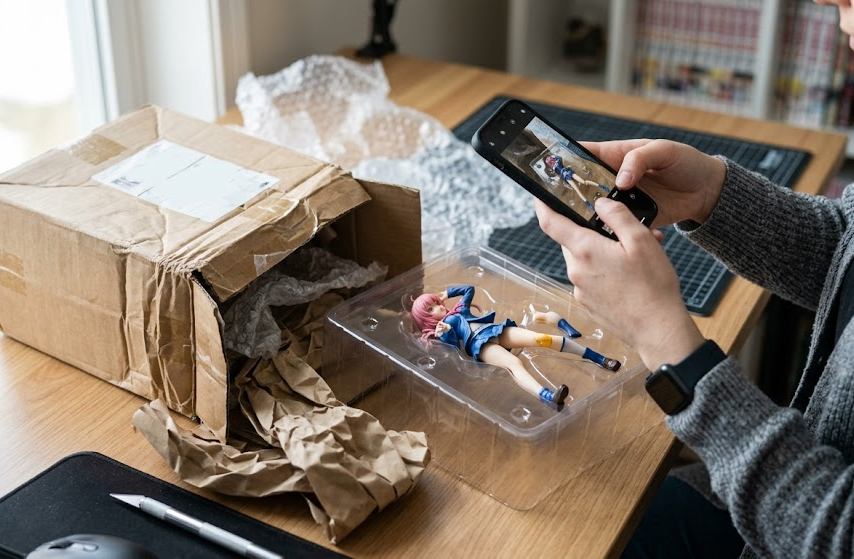
- the opened package with all packing materials still visible
- the product box front, back, top, bottom, and damaged edges
- the figure inside the blister or protective tray if visible
- close-ups of broken parts, paint transfer, snapped pegs, bent pieces, or detached accessories
- a wider shot showing the damaged area in context
- any loose fragments found in the packaging
Good claim photos do two things at once: they prove the item condition and they connect that condition to the packaging state. That is especially important when the dispute is whether the problem was pre-existing quality control or anime figure damaged during shipping.
How to Tell Cosmetic Box Damage From Figure Damage
Not every claim works the same way. A dented shipper, a bent retail box corner, and a snapped figure part are related but not identical issues.
Cosmetic box damage only
If the figure itself is fine and the issue is limited to shelf box wear, window dents, or corner crushing, the outcome depends on the store policy and how collector-focused the seller is. For some buyers, box condition is a major part of item value. For other buyers, mild cosmetic damage may not justify a full return.
Figure damage or missing parts
If the figure has broken pegs, cracked hair strands, detached hands, chipped paint caused by impact, or missing accessories, the case is much stronger for a refund, exchange, or replacement request.
Why the distinction matters
The seller may route a box-condition complaint differently from a functional product-damage complaint. A carrier may also reject a claim more easily if the packaging looks mostly fine and the problem appears closer to manufacturing damage than transit damage.
When to Contact the Store vs the Carrier
Many buyers ask who should hear about the problem first. The safest default is to start with the seller unless the seller’s policy or carrier instructions clearly say otherwise.
Contact the seller first when:
- the item arrived recently and the store handles damaged-delivery support directly
- you need a refund, exchange, store credit, or replacement
- the damage includes the figure, accessories, or retail packaging
- you are not yet sure whether the store or carrier will own the claim
Contact the carrier quickly when:
- the outer box shows obvious transit damage
- the seller specifically asks for a direct carrier claim
- the package was insured and the carrier has a short reporting window
- the seller tells you to preserve packaging for carrier inspection
Practical decision tree
- Figure damaged + store has support policy: contact store first, attach full evidence, then follow their claim instructions.
- Outer carton clearly crushed or punctured: contact store first and mention visible transit damage; be ready for a carrier claim handoff.
- Package marked delivered but severely mishandled by carrier: document everything and notify both sides if timing is tight.
- Only minor box wear and figure is intact: review the return policy before escalating; some stores may offer partial credit instead of a full return.
Starting with the seller usually keeps the chain of responsibility cleaner because the store can decide whether to refund you directly, replace the item, or ask for carrier documentation.
What to Say in a Damage Claim or Replacement Request
A strong message is short, specific, and evidence-led. Do not write a dramatic essay. Show what arrived, when it arrived, and what resolution you want.
Sample claim message
Hello, my order arrived today with shipping damage. I have attached photos of the outer carton, inner packaging, product box, and the damaged figure parts. The item is not in acceptable condition on arrival. Please let me know whether you can offer a replacement, refund, or the next steps for a damage claim. I have kept all packaging for review.
Useful details to include:
- order number
- delivery date
- exact damaged part or packaging issue
- whether the figure is displayable or unusable
- whether you prefer a refund, exchange, or replacement
- confirmation that you kept all packaging and evidence
This makes your return request or replacement request easier to route and harder to misunderstand.
How to Store the Damaged Item While the Claim Is Open
Once the case is open, your job is to preserve the condition exactly as documented.
- keep the item in its tray, clamshell, or original protective wrap when possible
- store loose parts in a small labeled bag so nothing disappears
- keep the outer box and filler materials together
- do not attempt permanent repairs before approval
- avoid extra sunlight, dust, or accidental handling that could change the evidence
That matters because some sellers and carriers may request additional photos later, and a changed condition can muddy the timeline.
Common Mistakes That Hurt a Broken Anime Figure Refund
A broken anime figure refund or exchange becomes harder when buyers accidentally erase the evidence.
The biggest mistakes are:
- throwing away the shipping box too early
- taking only one blurry photo
- contacting support without the order number
- gluing broken parts before review
- waiting too long to report the damage
- describing the issue vaguely instead of naming the exact break, crack, chip, or box damage
Fast, organized reporting usually beats emotional reporting.
FAQ
Should I open the packaging if I think the figure is damaged?
Yes, but do it carefully and document the process. Take photos of the outer box first, then continue photographing the packaging and figure as you open it.
What photos do I need for a damaged anime figure claim?
You should photograph the shipping box, shipping label, inner packaging, product box, damaged figure parts, and any loose fragments. Wide shots and close-ups together work best.
Who should I contact first: the seller or the carrier?
In most cases, contact the seller first and follow their instructions. Contact the carrier quickly as well if the package shows obvious transit damage or if the carrier claim window is short.
Does box damage count for collector returns?
Often yes, especially when the seller markets items to collectors and box condition affects value. The outcome depends on the store policy and how severe the box damage is.
Summary Takeaway
If your anime figure arrived damaged, the winning sequence is simple: keep the packaging, take complete claim photos, identify whether the issue is figure damage or mostly box condition, then contact the seller promptly and follow any carrier-claim instructions before changing anything. The cleaner your documentation is, the better your odds of getting a refund, exchange, or replacement without a long support fight.